I tried to build my own AI-native business OS. Here's why I scrapped it.
A 20-agent Electron app that didn't ship. The decision to throw it away. What I'd tell anyone tempted to build the same thing.
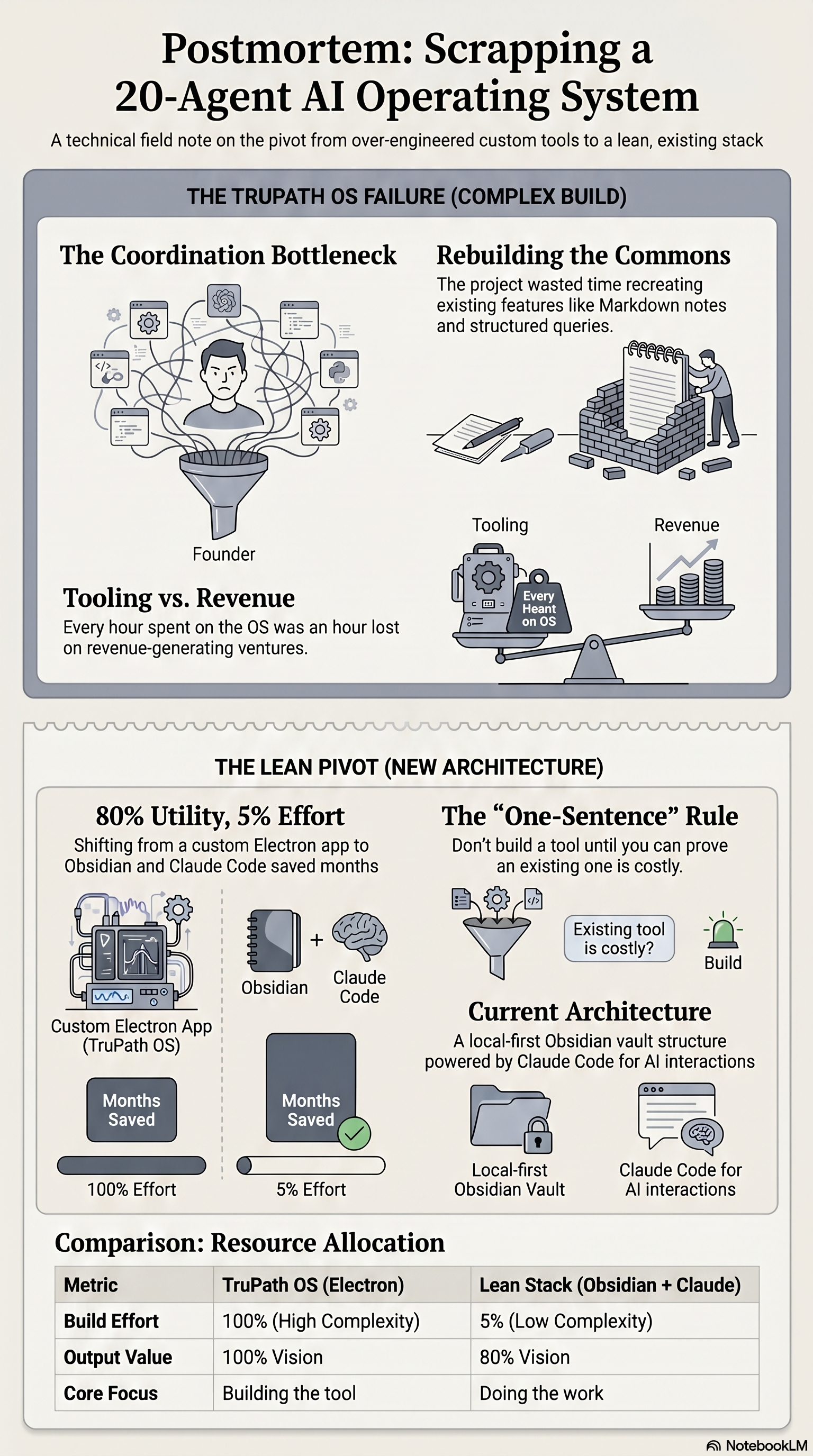
I spent three months in early 2026 building something called TruPath OS. The idea was a custom Electron app, local-first, AI-native, business OS for the holding company. React 19 frontend, SQLite under it, OpenRouter for the model calls, an 8-table schema I designed myself, and a 20-agent build team I'd scoped out to ship it in phases.
It didn't ship. End of March I killed it.
Looking back that's probably the best call I've made on the portfolio so far.
The vision wasn't dumb. I wanted one place where every piece of business knowledge lived as queryable data. AI agents would have structured access through a typed schema. I'd get a real command center for every venture I was running. Reasonable on paper.
The tool became the work
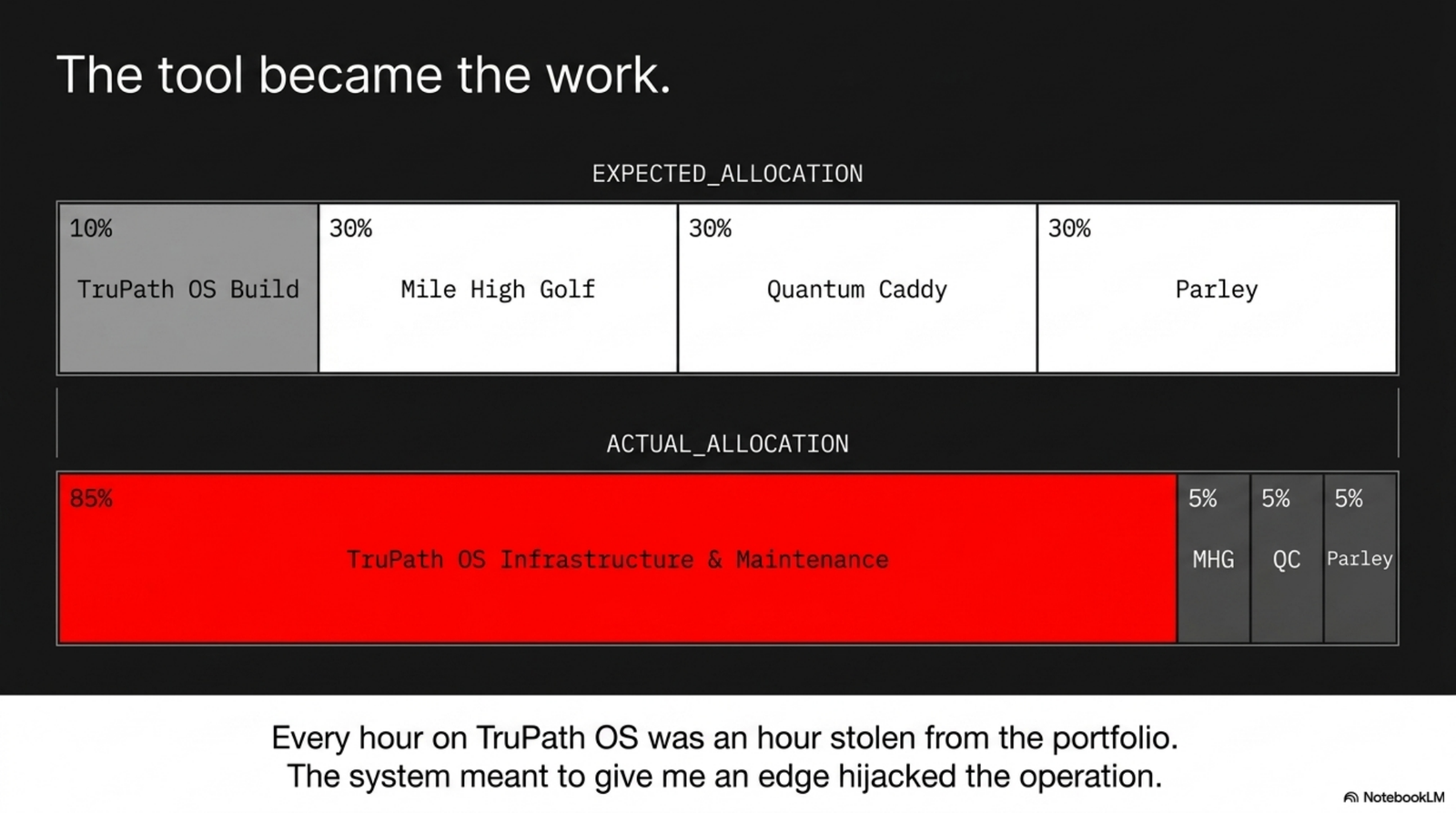
What I missed is that I was building the tool to do the work instead of doing the work. Every hour on TruPath OS was an hour not on Mile High Golf or Quantum Caddy or Parley. The thing was supposed to give me an edge and instead it WAS the work.
Twenty agents, one bottleneck
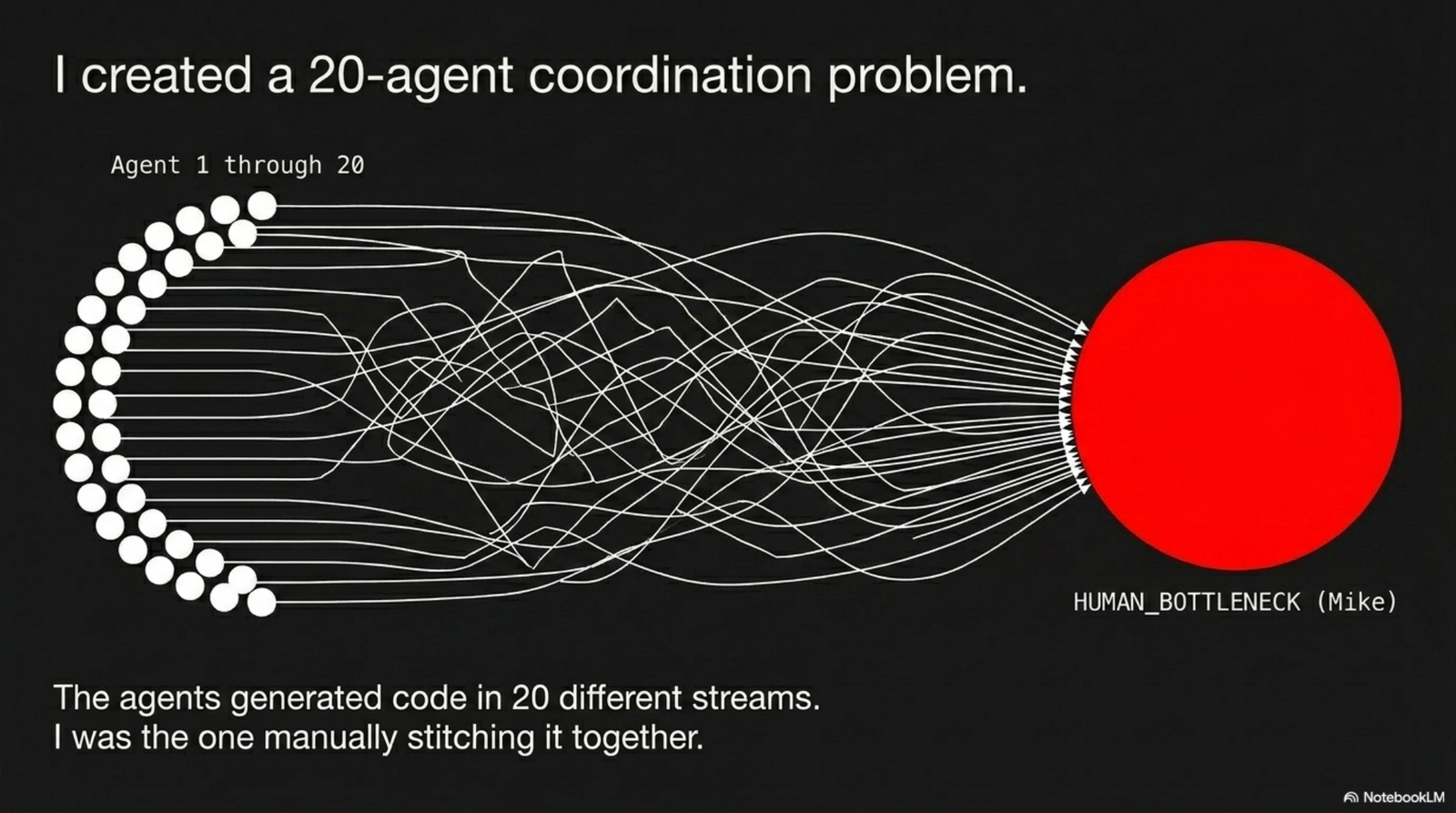
The 20-agent build team made it worse. I'd created a coordination problem for myself. The agents were generating partially-correct code in 20 different streams and I was the one stitching it together. So I'd become the bottleneck the agents were supposed to fix.
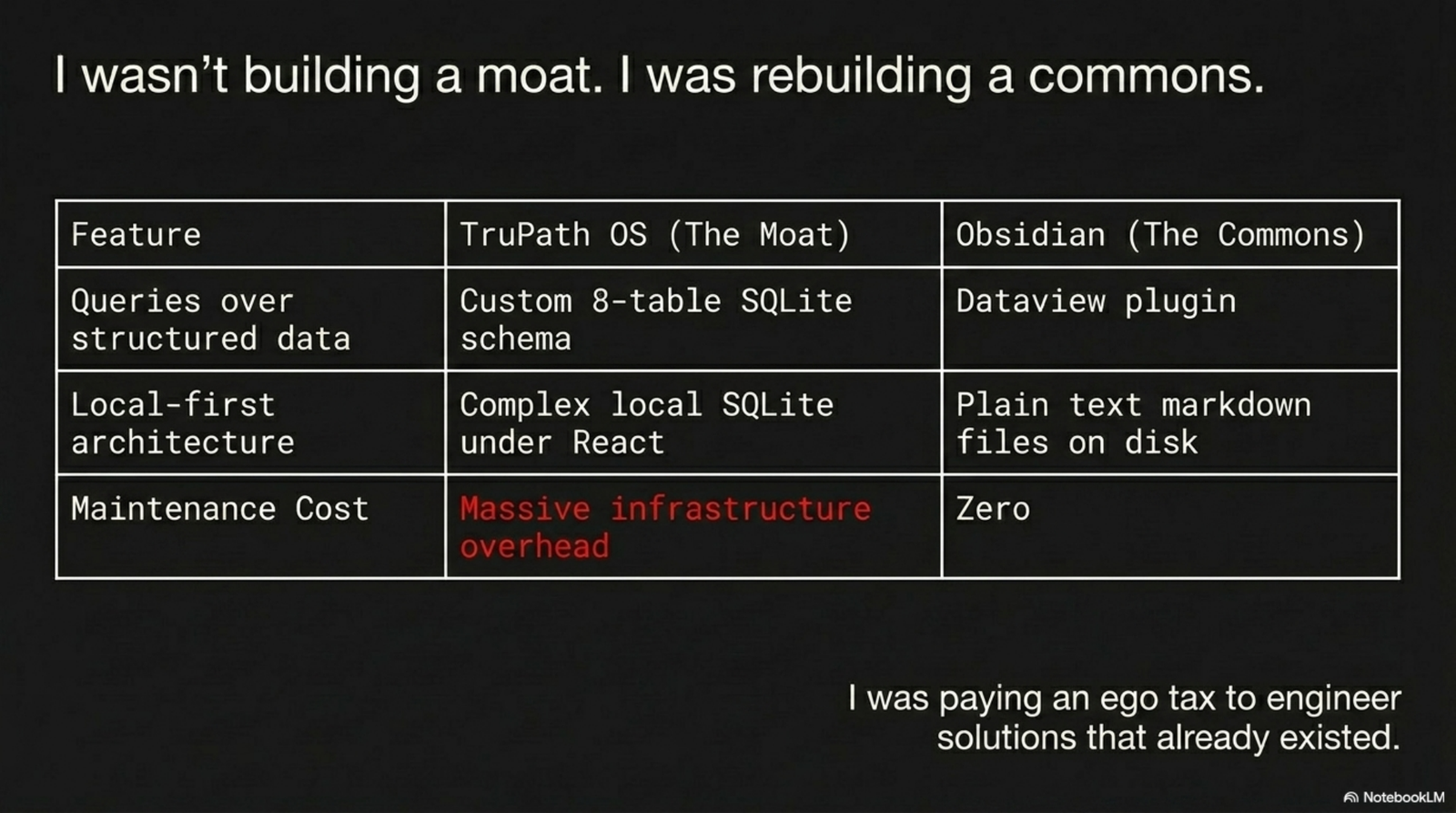
I wasn't building a moat. I was rebuilding a commons.
The third thing is the one that actually embarrassed me when I saw it. I was rebuilding stuff that already existed. Markdown notes, Obsidian. Queries over structured data, Dataview. Kanban, plenty of plugins. Local-first, well, markdown files on disk are about as local-first as you can get. I wasn't building a moat. I was rebuilding a commons.
The 80/5 decision
On March 29 I sat down and did a SWOT on the two paths. The number that came out was 80% of the vision at 5% of the build effort, if I just used Obsidian and Claude Code. I killed it that afternoon. Disbanded the agent team. Archived the Electron repo. The next morning I started building the vault structure I actually use today.
The operator's rule for tool building
The rule I took from this one: don't build a tool until you can write down, in one sentence, what an existing tool costs you that justifies the build. If you can't write the sentence honestly, you're not allowed to build it.
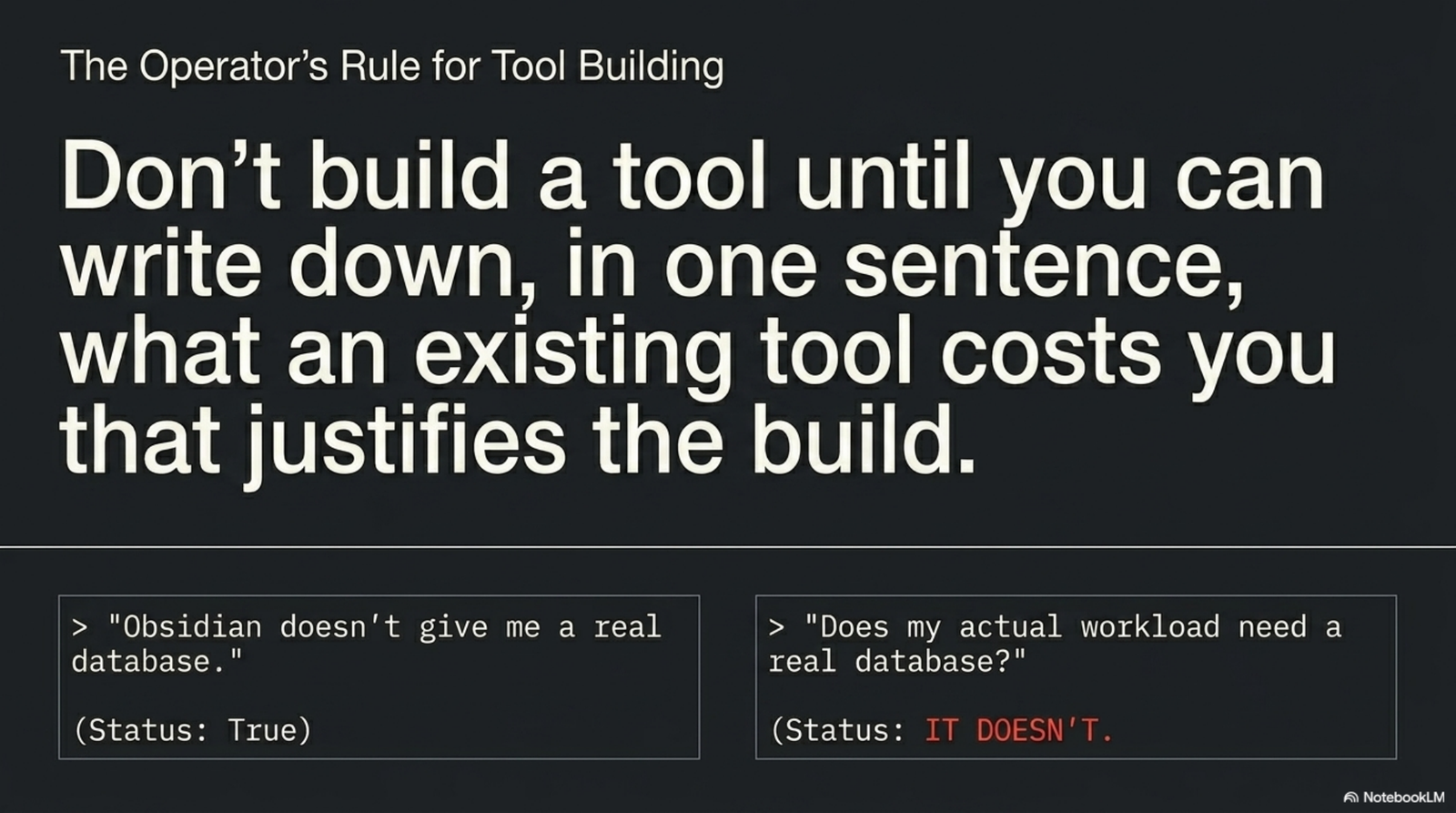
For TruPath OS the sentence I'd been telling myself was "Obsidian doesn't give me a real database." That was true. But I never asked the follow-up. Does my actual workload need a real database? It doesn't.
What killing the project paid for
Most of what I have to write about now exists because I killed that project. The Apex routing model exists because I had time to design it. The QC computer-vision rig got built because I had the hours. The Mile High Golf SBA package is on schedule because I'm not splitting attention with a frontend rewrite. This publication exists because I'm not maintaining infrastructure I never needed.