Bundles you can drop into your repo today.
Every bundle is a self-contained, MIT-licensed artifact extracted from live work across QC, MHG, and Parley. Tap any card to read the full bundle on this site, or grab the source on GitHub.
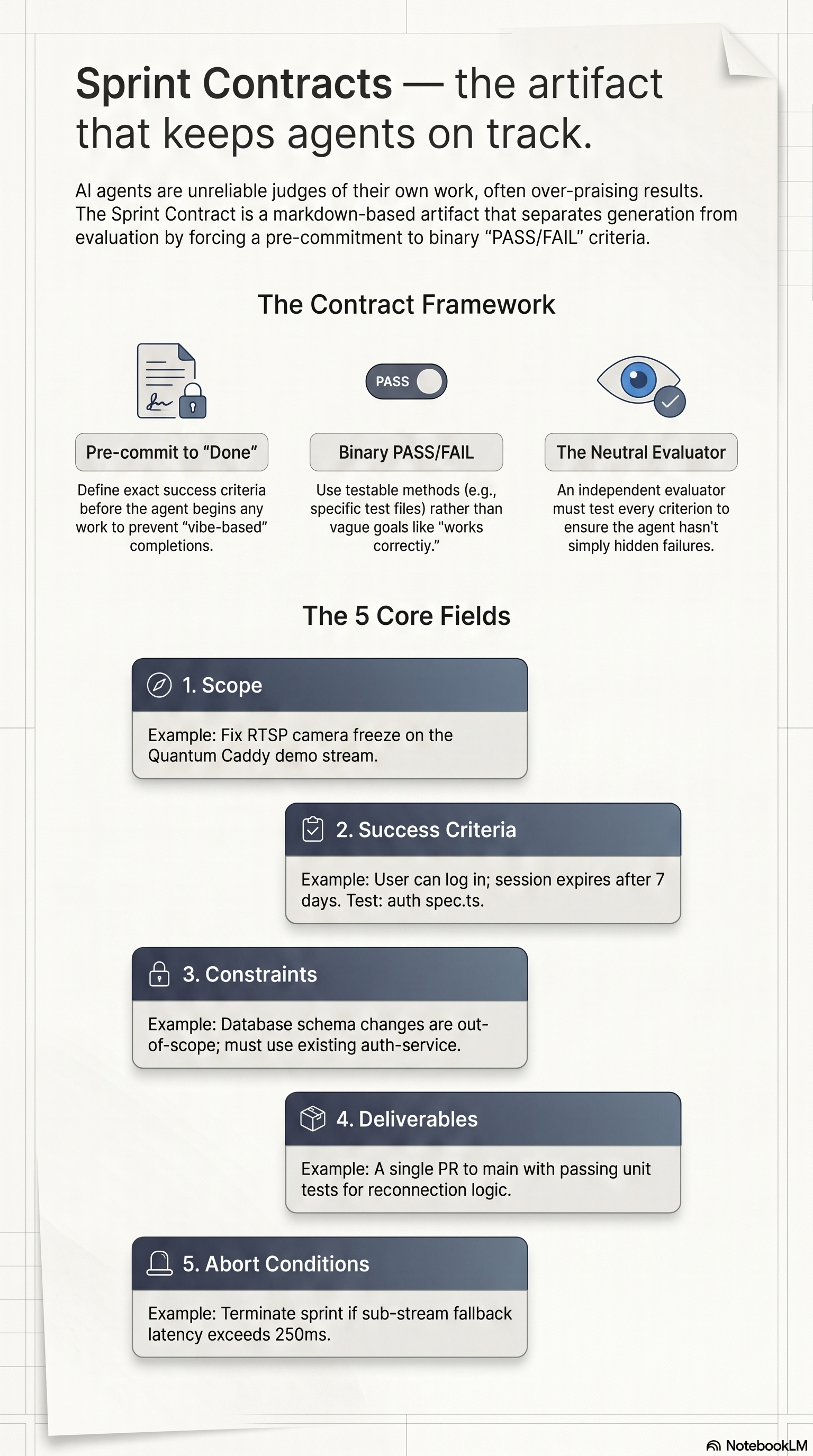
Sprint Contract System
Pre-work contracts co-signed by builder and evaluator. Eliminates close-enough shipping. 48 contracts shipped.
- Adapted from Anthropic's Harness 2.0 research
- 6 worked examples from QC, Parley, and the Mile High software
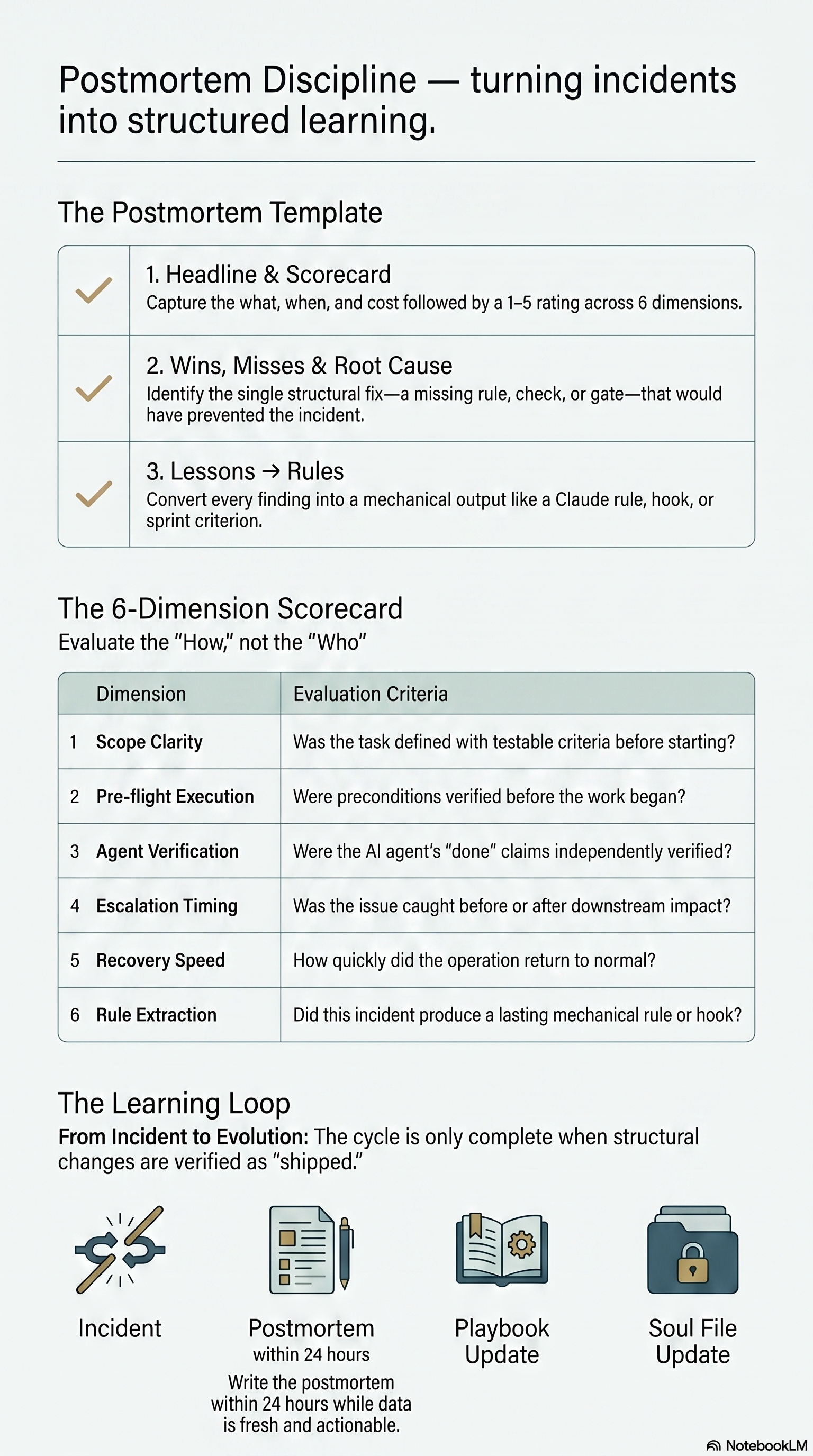
Postmortem Discipline
Blameless postmortems with structural action items. The discipline that makes the same mistake stop happening twice.
- 26+ postmortems shipped across QC and Parley
- Owner-sentiment section is required, not optional
CLAUDE.md Template
The annotated skeleton every Claude Code operator needs before their second week. Three worked examples, one framing essay, and the advice everyone skips: what NOT to put in.
- 3 worked examples: solo founder, 5-person team, agency with client rotation
- Covers the load-everything vs. read-on-demand decision explicitly
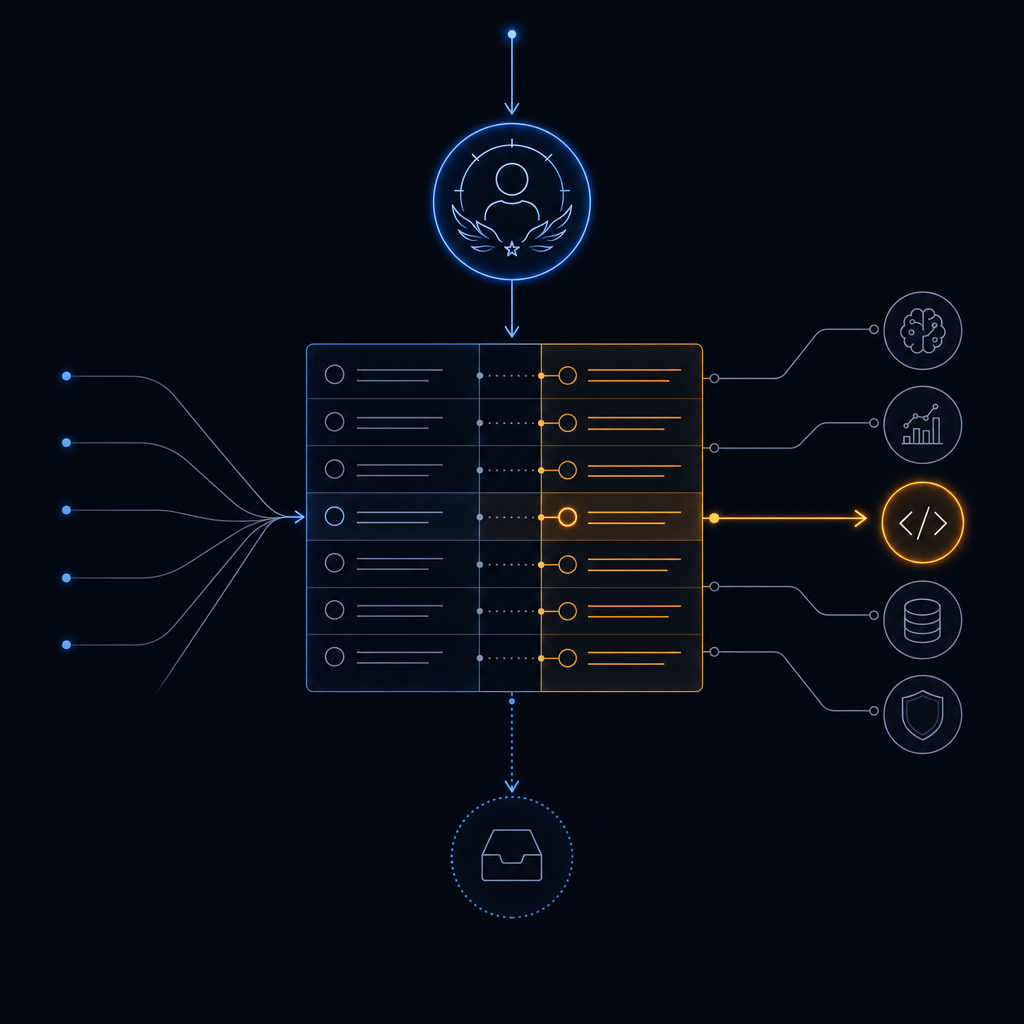
Agent Routing Template
The chief-of-staff + N-specialists scaffold. Routing table, authority levels, and an escalation protocol — the piece everyone skips until it bites them.
- 3 worked examples: solo founder, three-venture stack, 5-person team
- Escalation protocol with a full worked example — the most-skipped piece
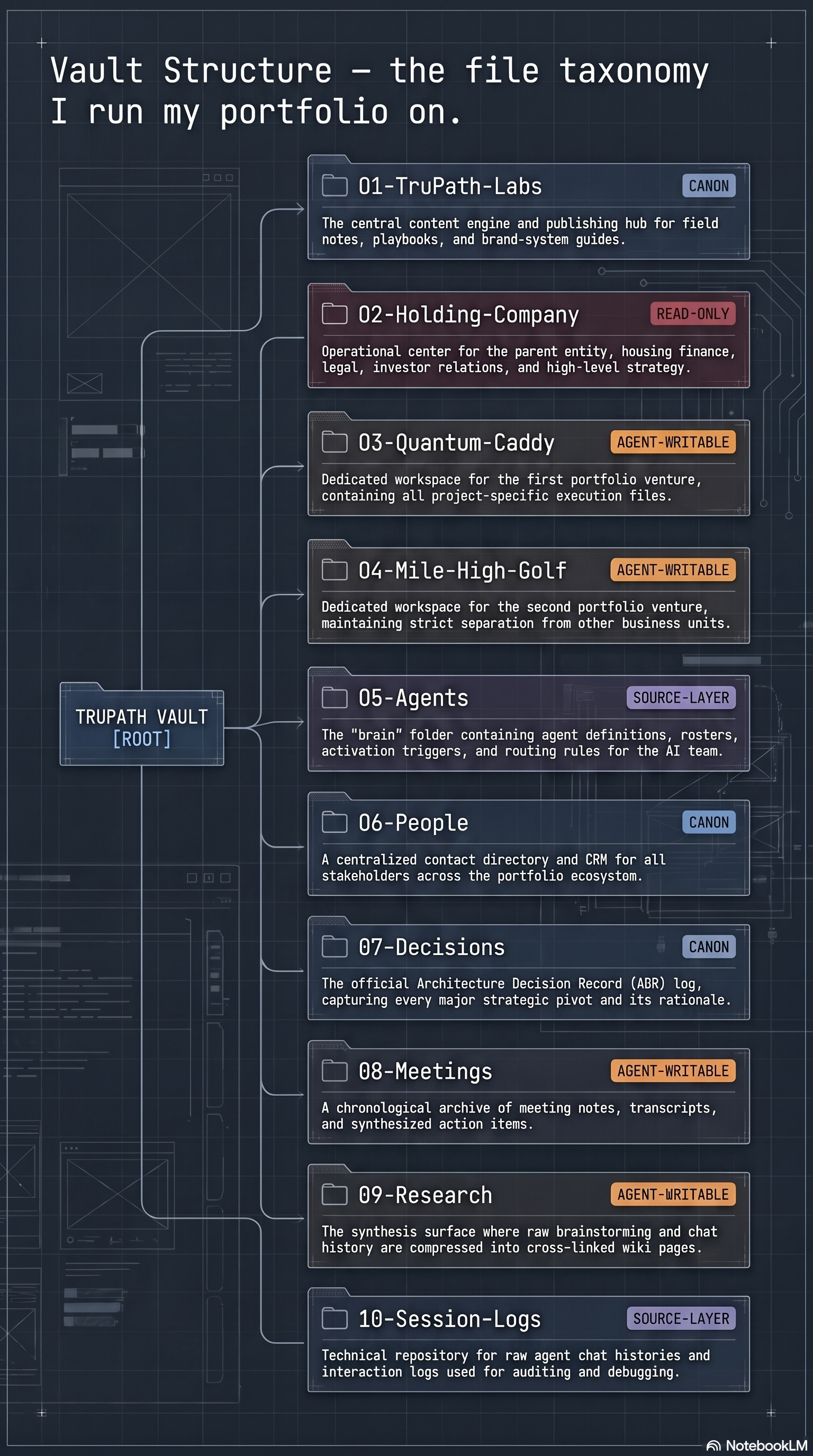
Vault Structure
13-folder Obsidian template that scales across multiple ventures. The operating system around your AI agents.
- 13 polished templates, ready to use
- Karpathy-style research synthesis layer included
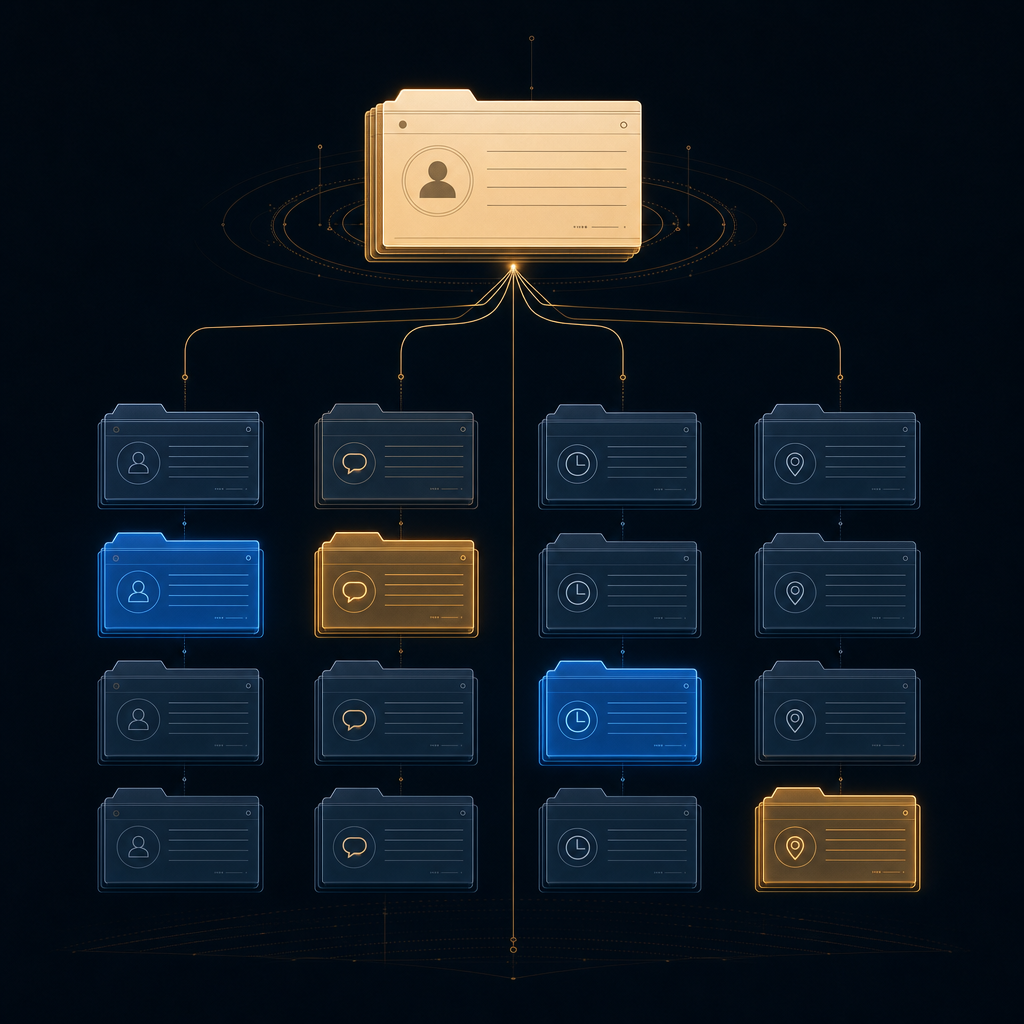
Memory Architecture
The MEMORY.md index pattern. Four memory types, a staleness protocol, and the one rule that stops memory systems from becoming archives.
- Four memory types: user, feedback, project, reference — each with its own shelf life
- Staleness protocol with date-stamp conventions and prune cycle
Agent Hierarchies
Authority levels, the mothership pattern, generation/evaluation separation. The structural decisions most multi-agent setups skip until they break.
- Five authority levels from Observer to CEO — each with distinct write-access rules
- Generation/evaluation separation: why the agent that built it can't grade it
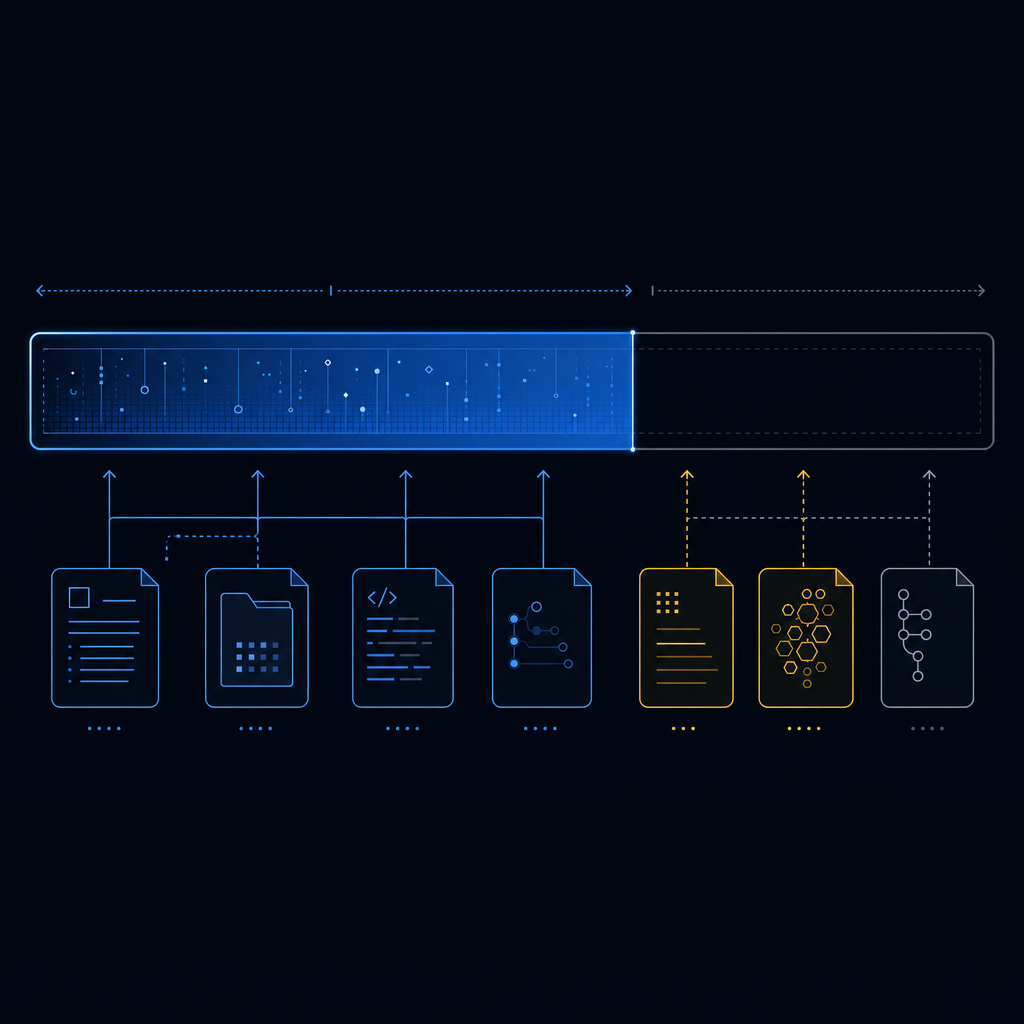
Token Discipline
Context window hygiene. What belongs in CLAUDE.md vs memory vs code. The compaction strategy that keeps sessions fast after month 3.
- CLAUDE.md size target: under 200 lines — if it's longer, information leaked in that belongs elsewhere
- The load-everything vs. read-on-demand decision, with the pointer pattern that solves it
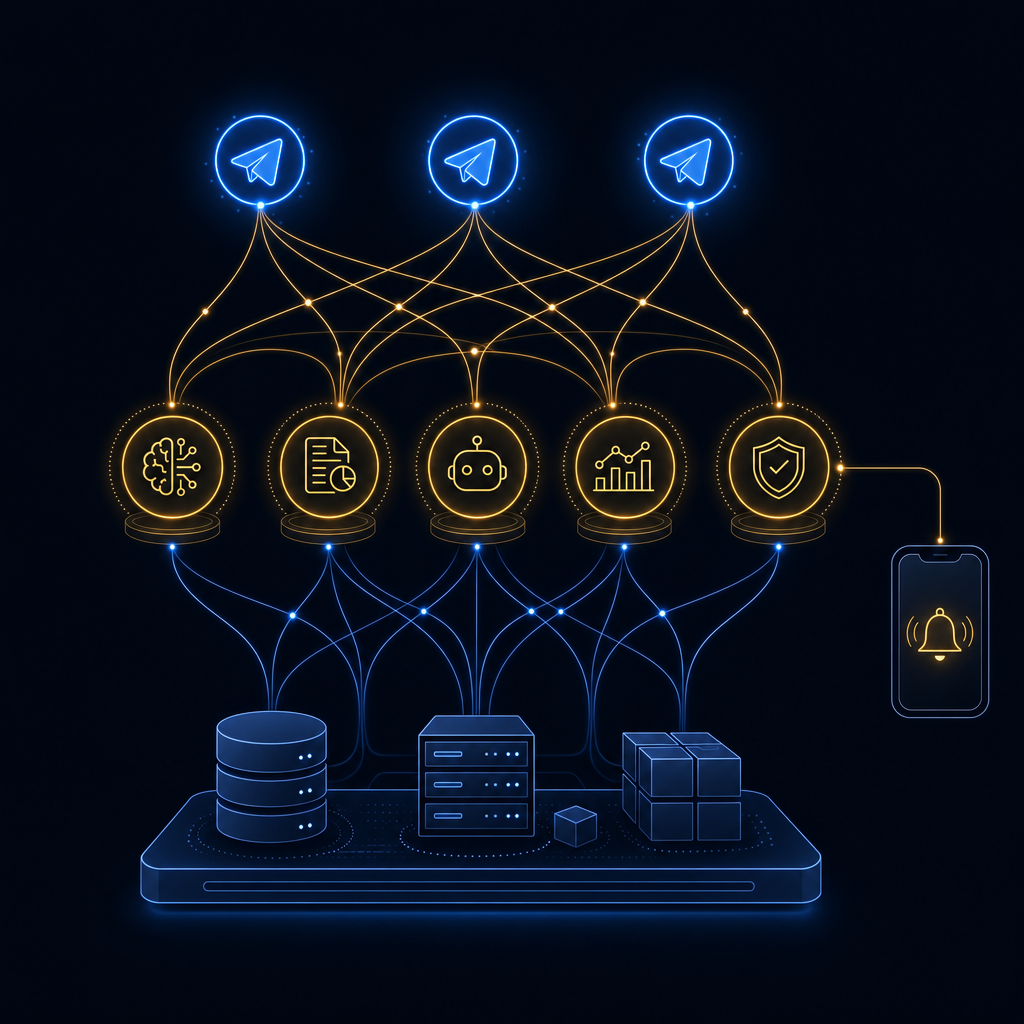
TruPath Stack
The assembled picture — how agents, hooks, memory, sprint contracts, kanban, and the Telegram bridge connect into a single operating system for a multi-venture portfolio.
- Three ventures, five agents, 15 hooks, one Supabase kanban — wired together
- Telegram bridge: phone → Claude headless → portfolio status in 30 seconds
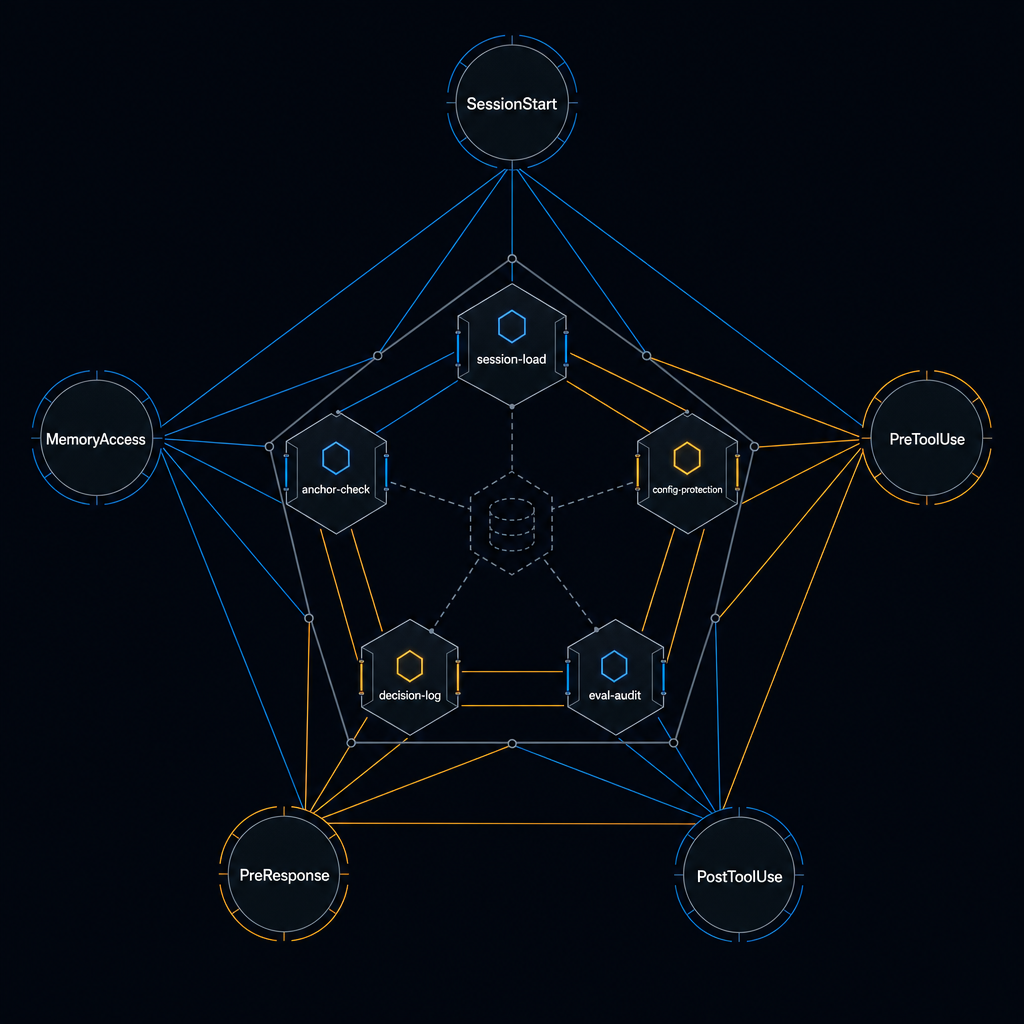
Hooks Bundle
Five production-tested Claude Code hooks — session loading, config protection, eval auditing, decision logging, anchor-check cadence. The mechanical enforcement layer your CLAUDE.md rules have been promising.
- All 5 hooks read real Claude Code JSON input — none is pseudocode
- Config-protection hook prevents the class of incident that cost 4.5 hours of test setup

The Security & IP Discipline Playbook
Five gates that keep a fast-moving AI shop from leaking its secrets, its source license, or its patent rights. Written the day I pasted my session tokens into a chat.
- Disclosure, license, secrets, agent-code, and IP-review gates — each with a checklist
- Grounded in the 2025–2026 record: the GitHub key leaks, the AGPL forks, the trade-secret cases

The CV-for-Physical-Sports Wedge Playbook
Don't build computer vision for sports. Build it for one sport — the one with the most constrained geometry and the simplest rules — get it referee-grade, then generalize. Three filters and the trust-bar framework.
- Three filters that turn 'CV for sports' into a winnable first product
- The trust-bar framework — why 96% accurate is a dispute generator

Why run a parallel research arm
A small operator can run a parallel research project alongside two startups without it cannibalizing them — but only under specific conditions, and Parley is the worked example.
- The decompression-channel + underserved-research-area thesis
- Three conditions that mean don't start one

How to run one without it cannibalizing the startup
Four discipline levers that let a side research arm survive contact with the main work — scope rails, monthly cadence, public publishing, and decision logs, with kill criteria written down in advance.
- Scope rails + monthly cadence: the two levers that absorb the main work's variance
- A public publishing loop + decision logs: borrowed deadlines + a real audit trail

The Honest Sign-Language Research Playbook
The discipline behind Parley's notebooks: question-first contracts, signer-holdout splits, multi-seed floors, failure-modes-first, and a Deaf-community honesty checklist. The rules that make a 45% you can trust beat an 85% you can't.
- Pre-registered hypotheses + signer-holdout eval, from real notebooks
- Report the per-signer distribution, not the pooled mean
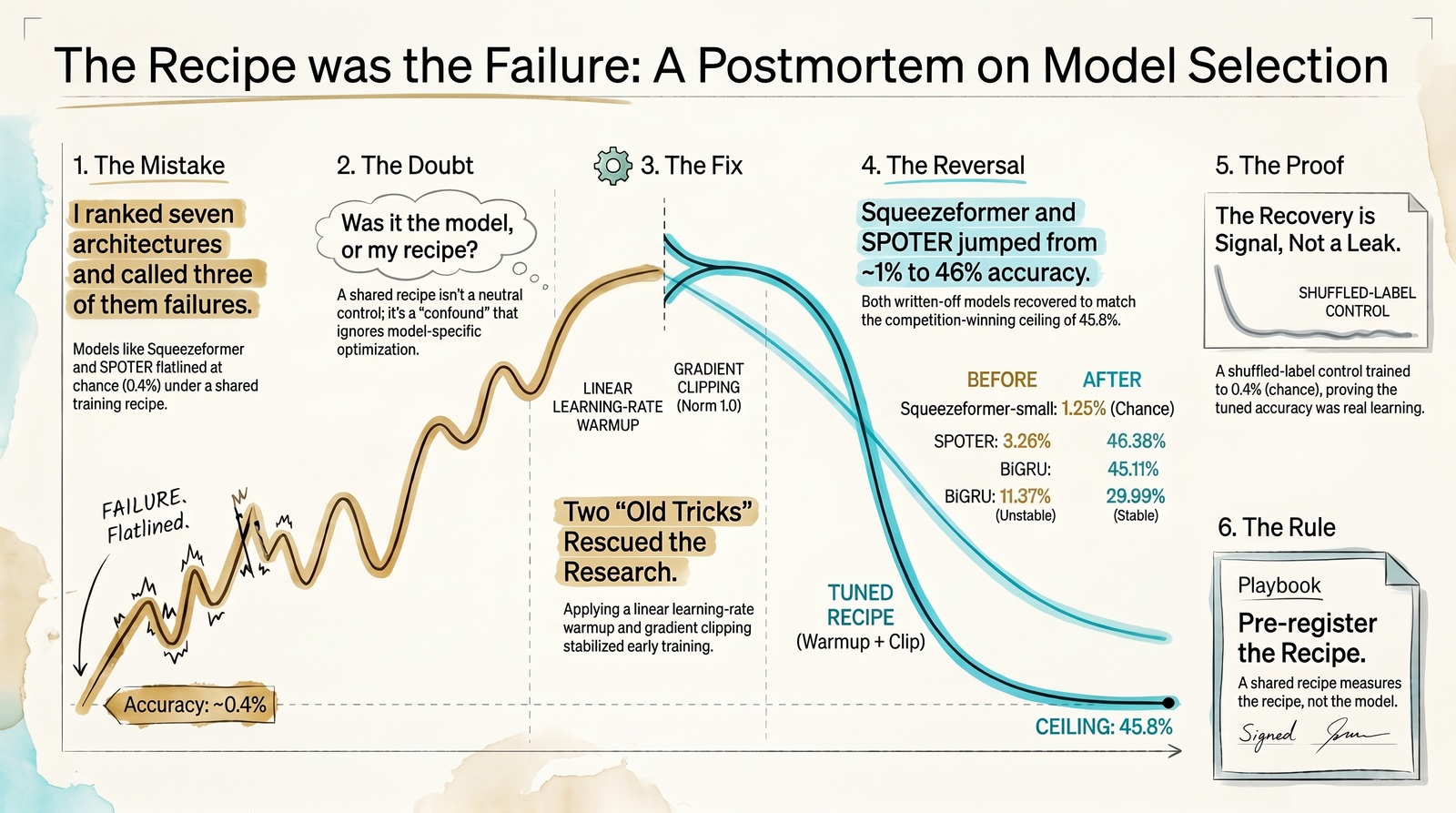
Pre-register the recipe before you rank architectures
A shared training recipe across architectures does not control for the recipe. It bakes it into the result and disguises it as an architecture finding. Four cheap controls keep the ranking honest.
- Why a shared recipe measures the recipe, not the model
- The four controls: per-architecture recipe, one hardware, seed spread, shuffled-label check

Run a falsification session before you trust your own asset
Operators accumulate load-bearing assets that were built under deadline and never adversarially examined. A one-evening AI falsification session is the cheapest insurance that exists, and the discipline is scheduling it before the asset feeds a decision.
- Why self-audit fails socially, and why a contract-bound agent doesn't
- The loop: asset inventory → falsification queue → session → measurement list
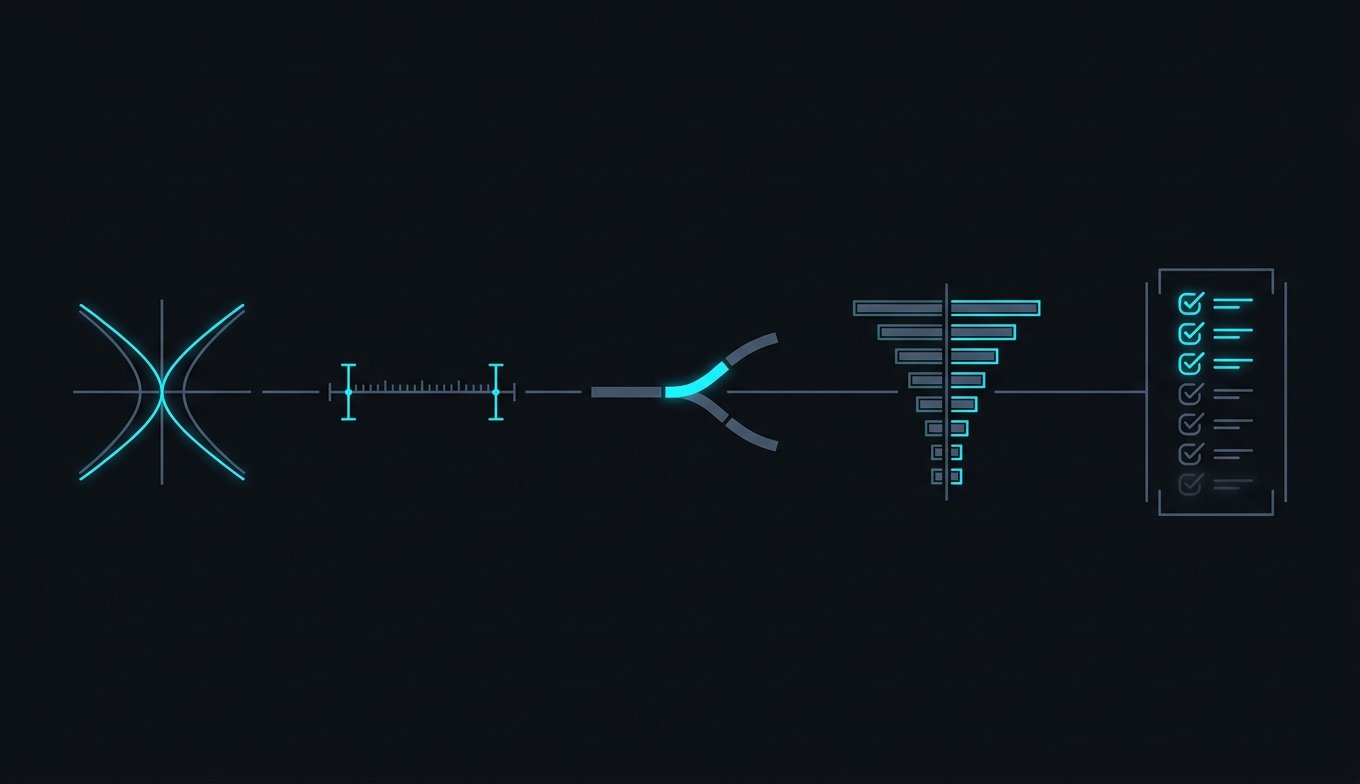
The five-phase audit: a science agent's working method
An agent audit of a Quantum Caddy simulator ran five phases in a fixed order — reproduce the as-built model, rebuild it from first principles, map the divergence, budget the uncertainty, ship a ranked measurement list. What each phase produced, what breaks it, and how to run it on a demand model or a game economy.
- Each phase manufactures the evidence the next one spends; the order is the method
- The deliverable is a ranked measurement list, not a verdict on the asset
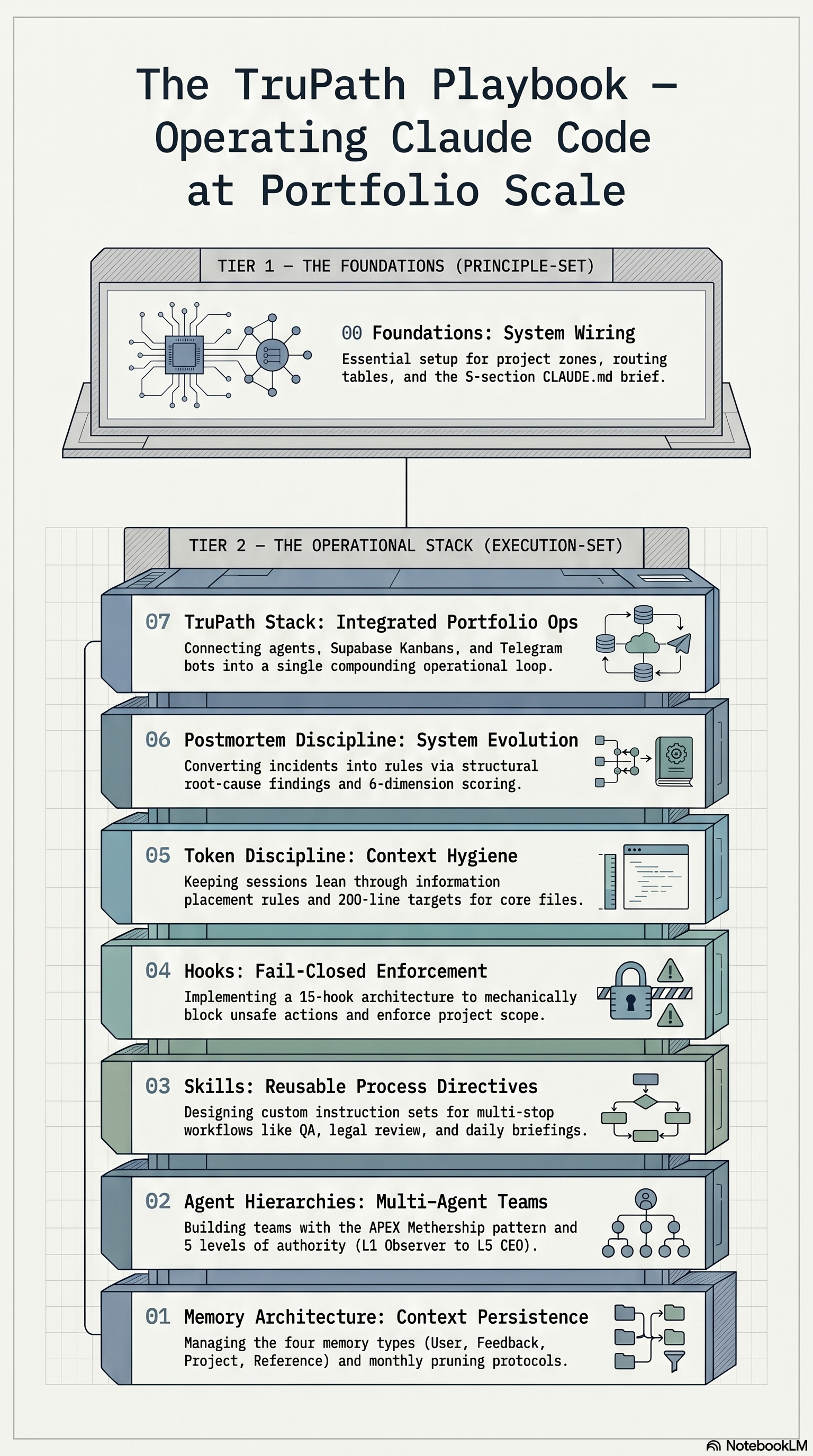
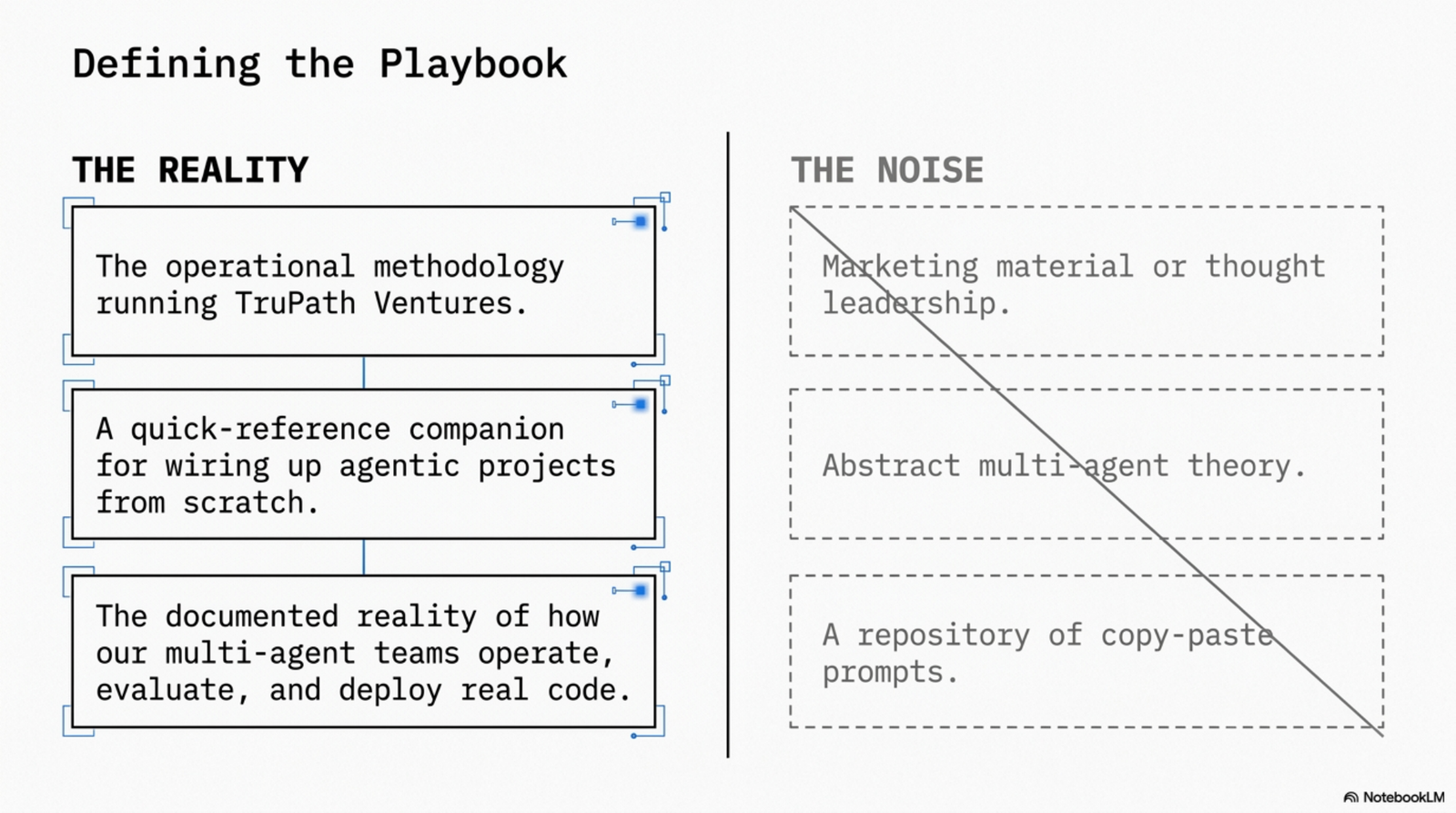
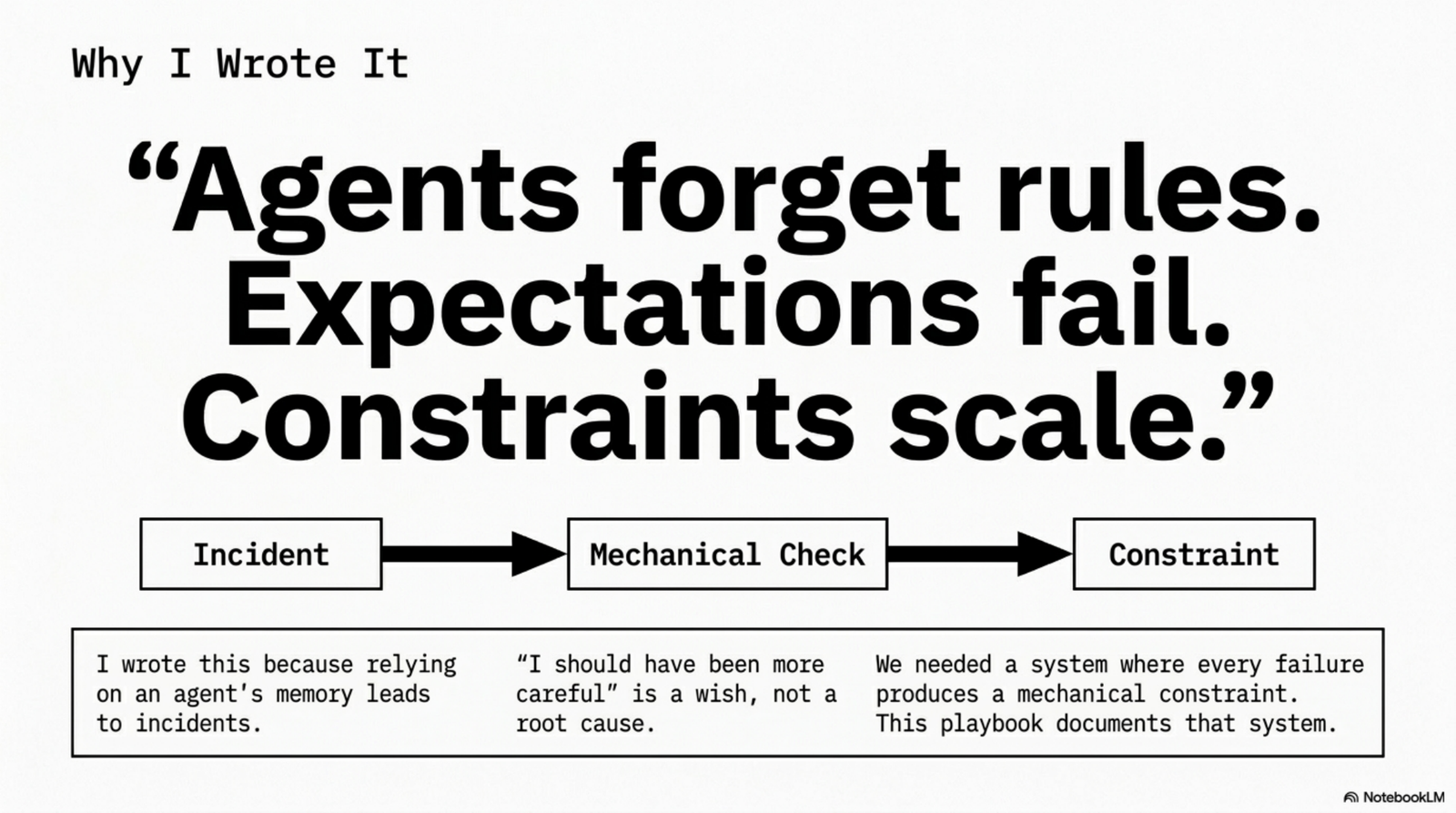
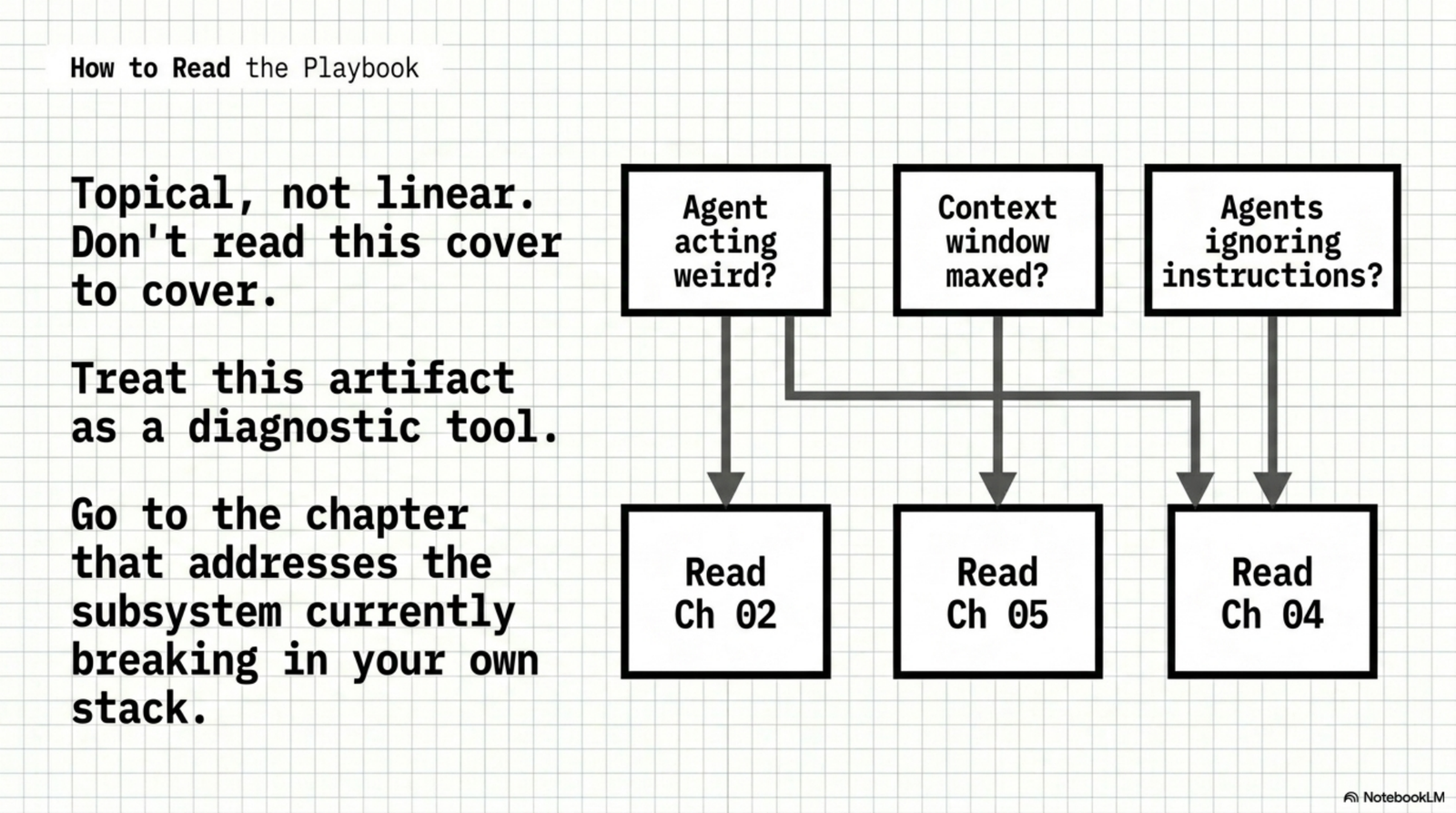
Three slides from the master playbook.
The lessons under the bundles.
The bundles above are extracted artifacts. The lessons are the disciplines that produced them. Three tiers, twenty-six lessons, each with a diagnostic prompt, an annotated transcript, a prompt kit, and a homework checklist. All live; all free.
Foundations
Your first CLAUDE.md, agent.md, skill, brief, document, report, web page.
Operating
Sprint contracts, postmortems, memory, hooks, vault-as-OS, agent routing.
Expert
Retrofit, real ROI, token discipline, scope creep, multi-venture, training, drift.