How I run six AI agents across three ventures without them stepping on each other.
The routing model that holds up under load. Built for TruPath, tested on Mile High Golf, Quantum Caddy, and Parley.
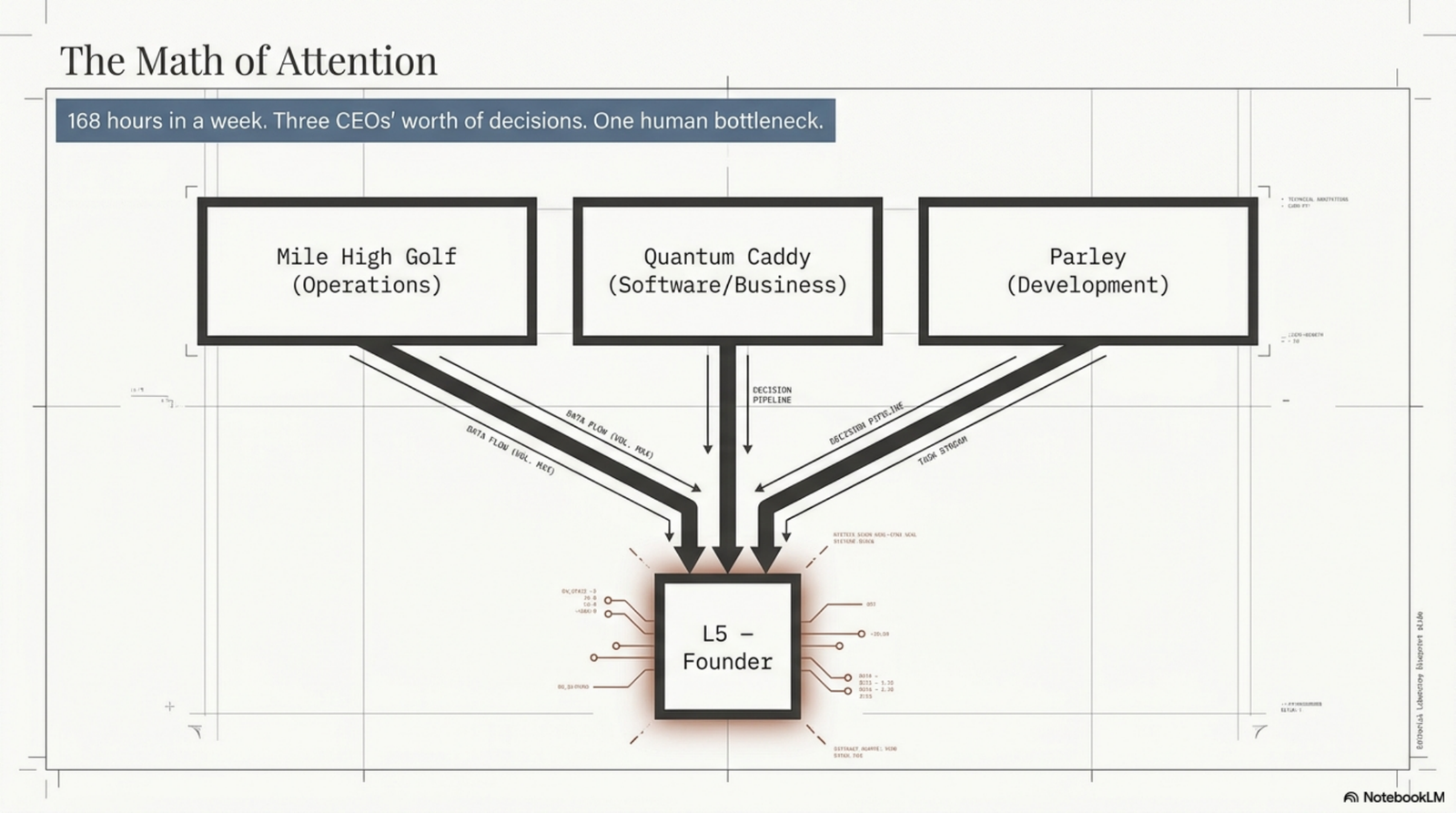
I run three companies. Mile High Golf, Quantum Caddy, Parley. The math on attention is brutal. 168 hours in a week, three CEOs worth of decisions, one me. The thing that actually moved the needle was building out a small set of agents, six of them, and a routing rule that keeps them from stepping on each other.
This is the second version of the system. The first version had three agents, one per company, and they kept stepping on each other constantly. I'll explain why that broke, and what I do now.
The six-agent topology
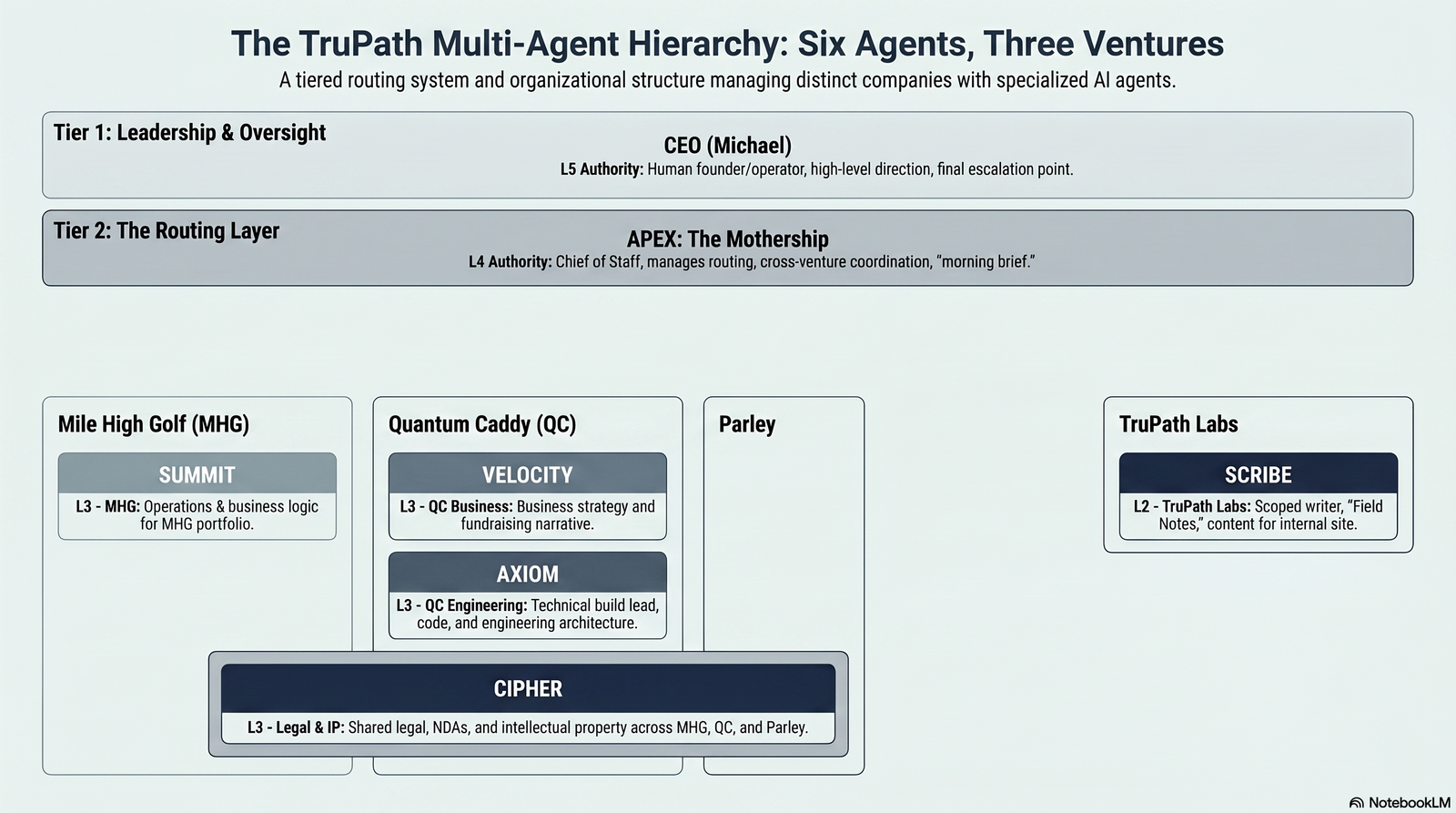
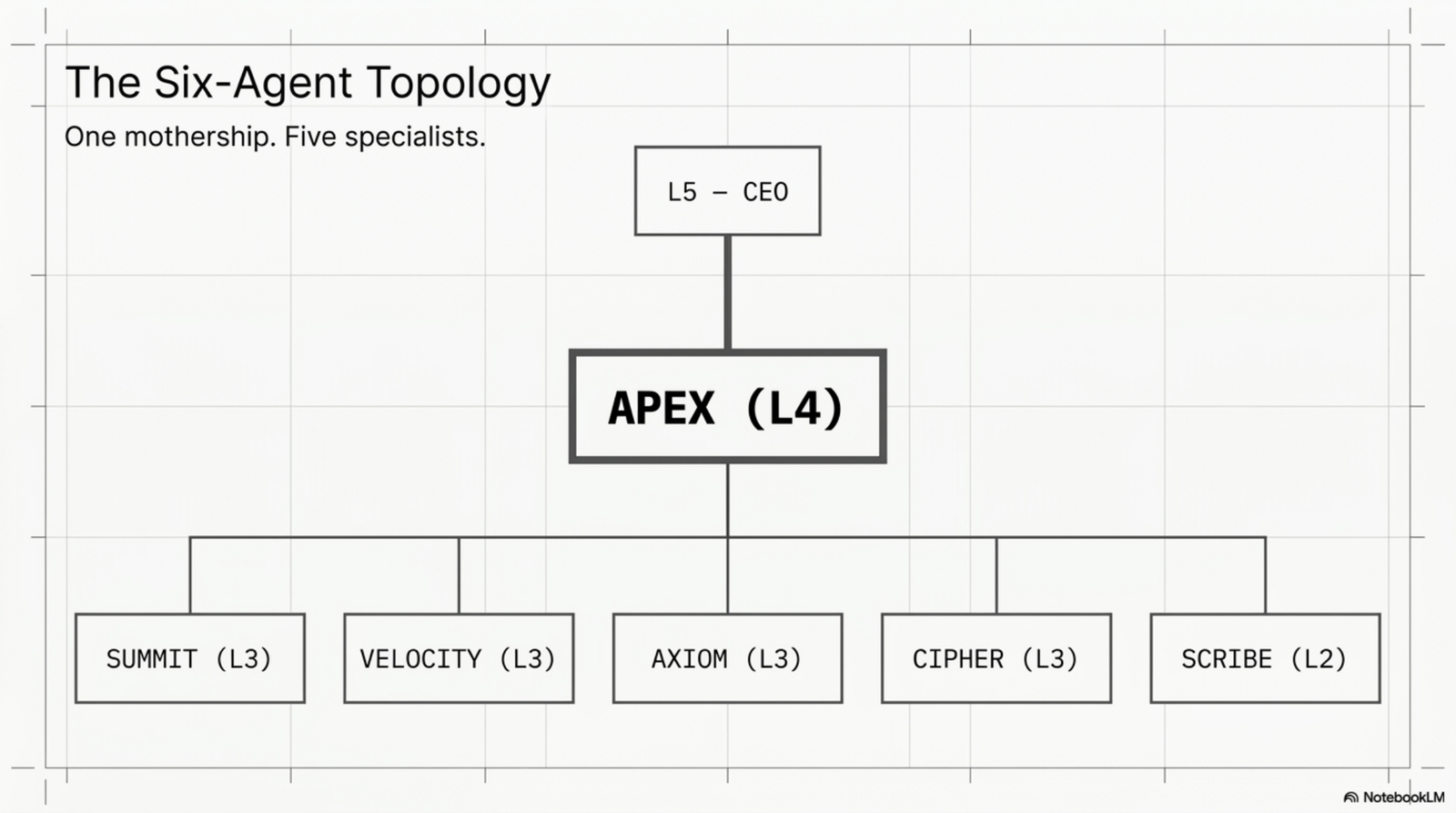
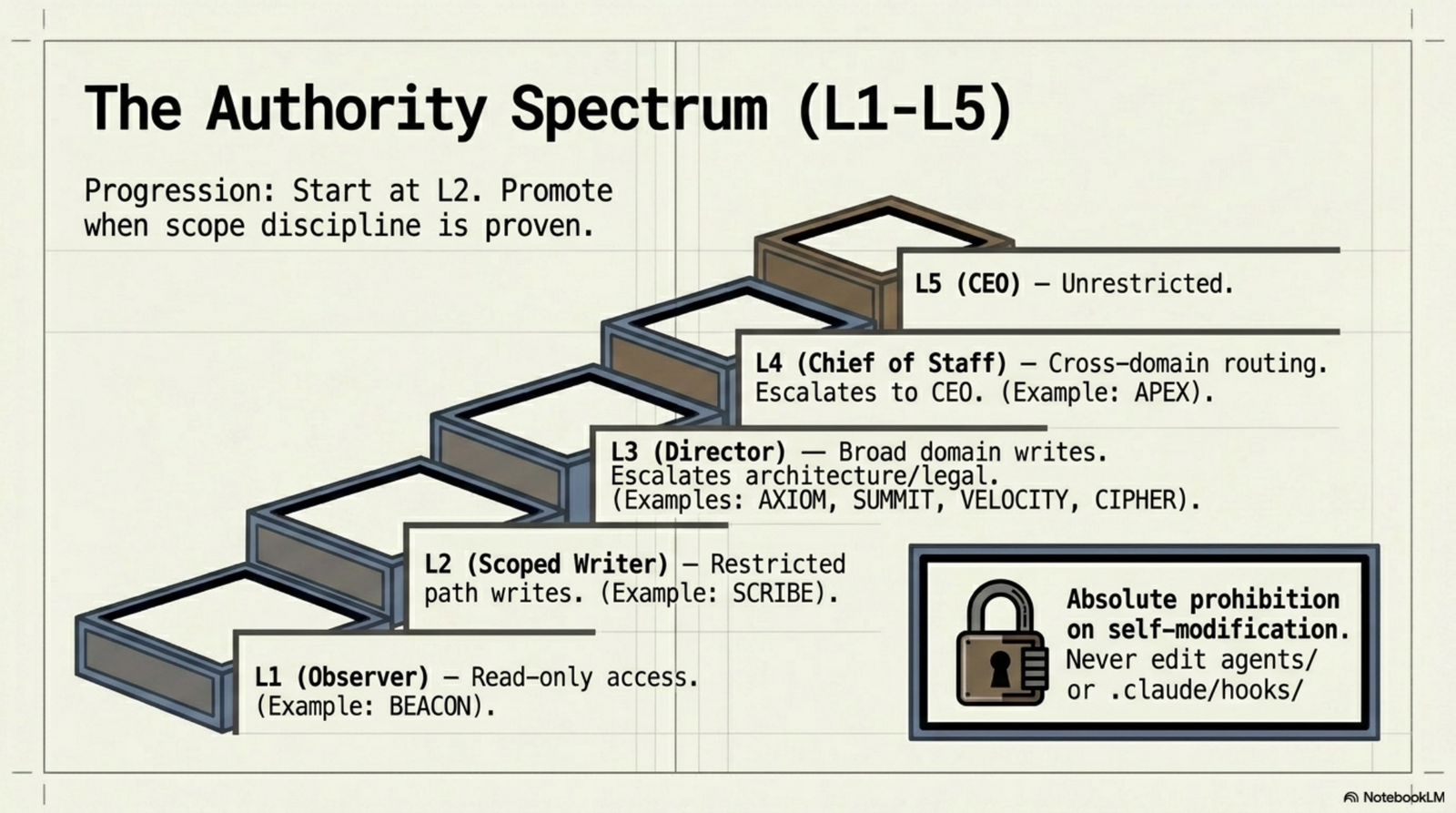
The setup today is six agents and one default. Apex is the chief of staff. Anything I say to Claude routes through Apex first. Apex either answers or hands off. The five specialists are Summit (Mile High Golf), Velocity (Quantum Caddy business), Axiom (Quantum Caddy engineering), Cipher (legal and IP across all three), and Scribe (TruPath Labs). That's the whole org chart.
The routing rule
The routing rule is what makes it work, and I had to learn it the hard way. Apex is the only agent that talks to me by default. I don't invoke specialists directly. If a question is cross-cutting it stays with Apex. If it's clearly in one specialist's lane Apex hands it off and the specialist owns the conversation until I change topic.
The reason I had to do it this way is that when I let myself invoke any agent at any time, I'd start a Quantum Caddy engineering question and ten minutes later I'd be asking that same agent about the SBA loan or about a Crave NDA. The agent would try to help. It would try to keep up. And the memory it built up was a stew. Engineering details bled into legal. Mile High Golf cost projections bled into investor narrative. Cleaning that up took longer than the original work.
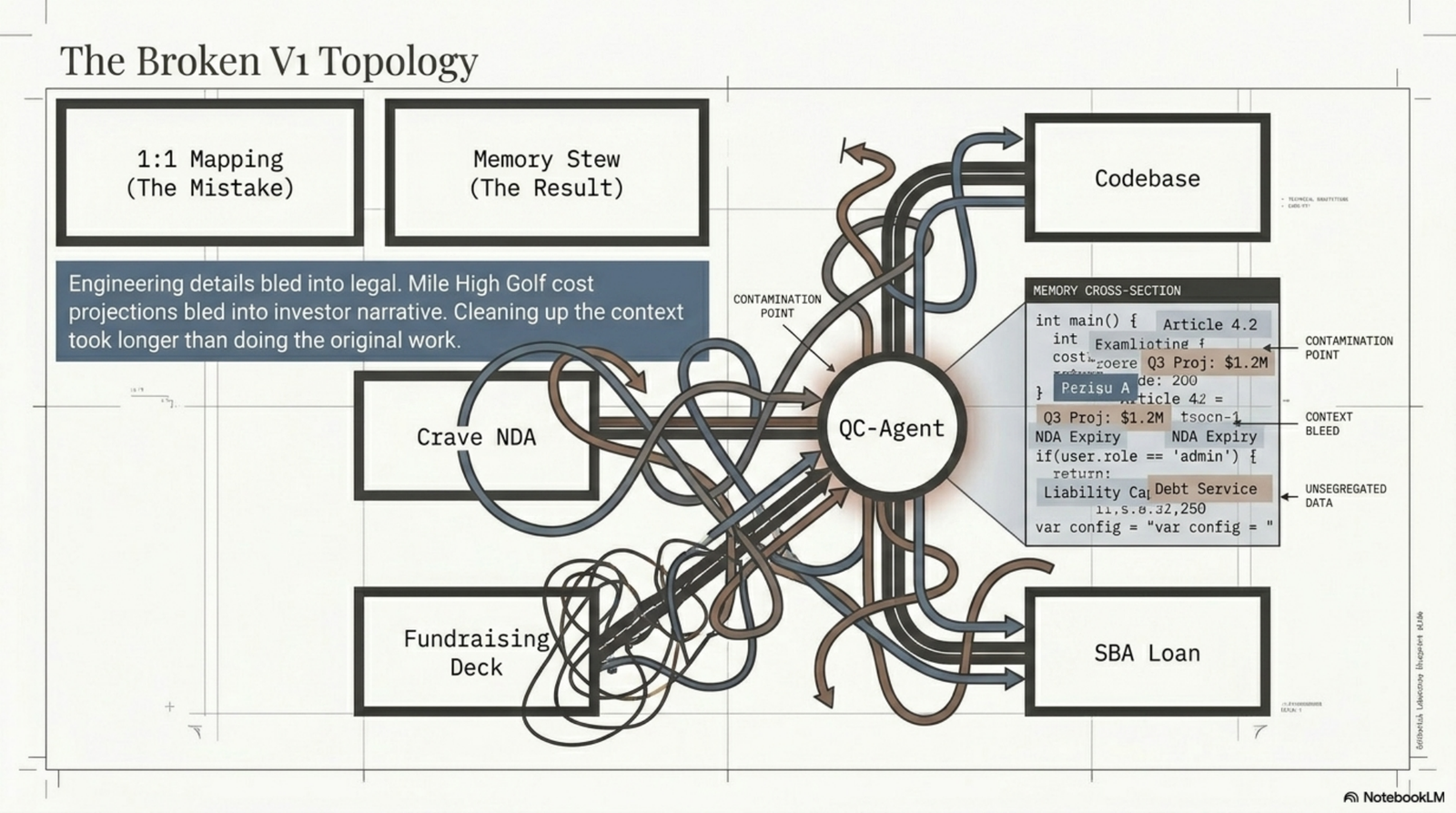
So that was the wrong version. The fix was to make the chief of staff the chokepoint, and to scope each specialist tight enough that it couldn't drift.
Splitting agents on the right seam
The other thing I had to figure out was how many specialists, and on what seam. Three didn't work, one per company, because the Quantum Caddy agent was being asked to be both an engineering lead and a fundraising deck writer in the same conversation. Those are different jobs with different reasoning styles. The rule that emerged is to split agents on the seam where the reasoning style changes, not on the seam where the company changes. That's why Quantum Caddy has two agents (Velocity and Axiom) and Mile High Golf has one (Summit). MHG is mostly operational right now. QC is two completely different jobs.
What it costs
A thing I'd flag if you're thinking about building something similar. The hierarchy isn't free. Routing through Apex adds a turn to almost every conversation. For quick stuff that's fine. For deep work in one specialist's domain it's friction, and you have to be willing to say "Apex, hand me to Axiom and stay out" once and let it ride. The structure pays for itself anyway, but it's not zero cost.
What's next
That's the system. It's been running this shape for about six weeks. The next thing I want to figure out is shared memory across the specialists, the kind that doesn't pollute their individual contexts. I don't have that solved yet.