The performance number we need is the one we do not have.
The Range spike has a full instrument, a protocol, and a hard exit bar. It still has no iPhone measurement. That is not a gap in the story. It is the story.
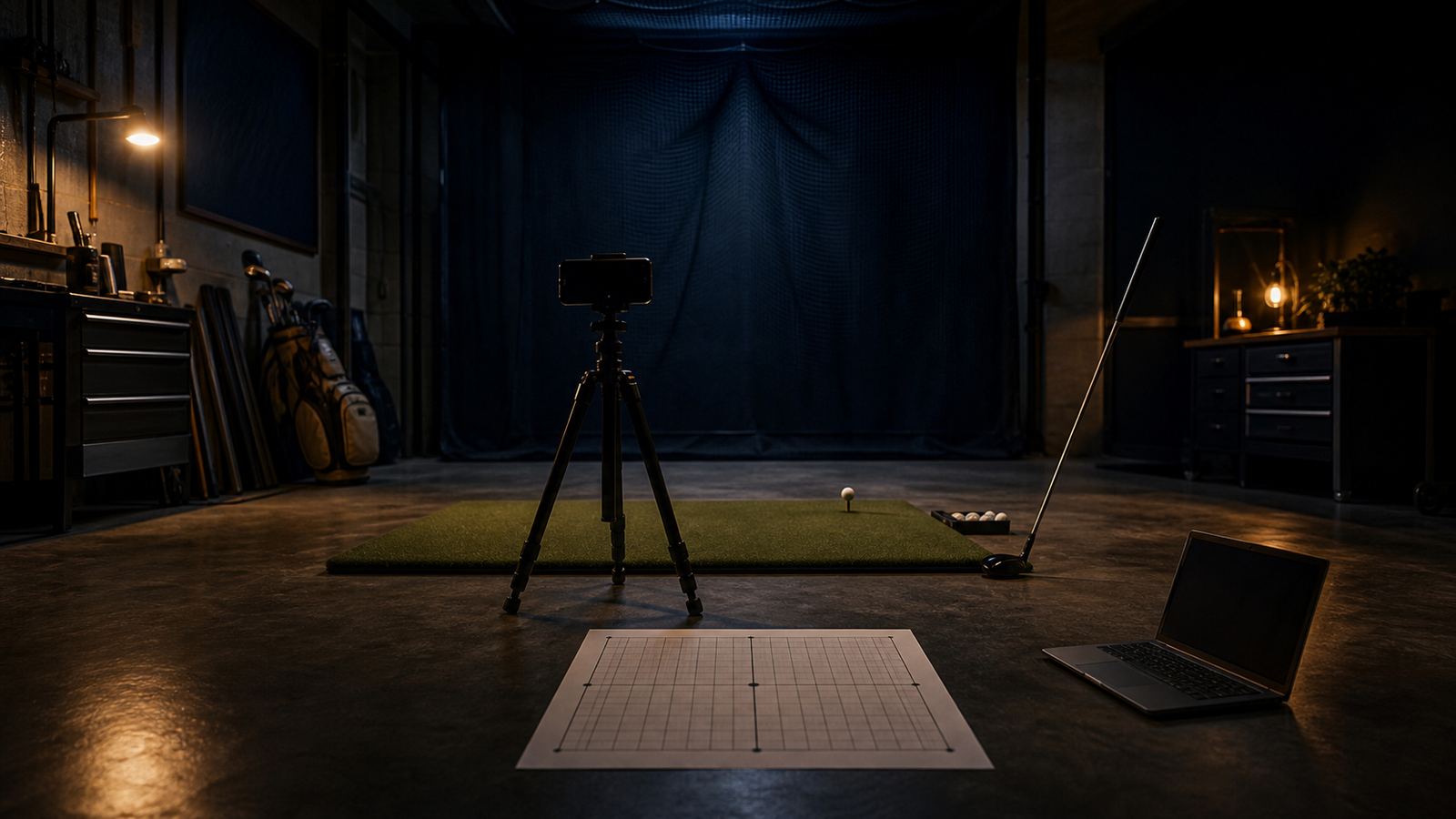
Swing Trainer began with a question that is less glamorous than a feature list: can a phone run the pose pipeline fast enough, outdoors, at golf distance, to support the Range premise at all?
The exit bar is specific: at least 24 sustained inference frames per second at 12 feet outdoors, on a real iPhone or iPad.
We do not have that number.
What exists
The project has a /spike instrument that records the difference between a requested camera rate and actual processed inference frames. It keeps rolling sustained FPS separate from a configured target. It records device and camera settings, GPU or CPU fallback, landmark behavior, ROI segments, errors, thermal observations, and an exportable JSON report.
That work was verified on a Mac against recorded video. The harness loaded the locally hosted model under the project’s CSP, mapped landmarks, drew the overlay correctly, kept ROI segments separate, and exported its report.
The software-rasterized headless run showed roughly 4–8 FPS. That is not a phone result. It is not a Range result. It is a property of that particular test rig.
What does not exist
No iPhone or iPad has produced the Phase 1 result. No outdoor twelve-foot run has been recorded. No pass/fail decision has been made.
The result template says this plainly: UNVERIFIED — NOT YET MEASURED.
That sentence is more valuable than a dashboard full of green checks. It prevents the project from turning a working instrument into a claimed capability.
The operating rule
A project has to distinguish four things: a design, source code, a test, and evidence from the real surface where the product will run.
The Swing Trainer spike has crossed the first three. The fourth is still open.
A failed measurement would not be a failed project. It would be an early answer to the question the project actually needs answered. A successful measurement would be useful too, but only after the device, distance, conditions, and sustained behavior are written down.
For now, the honest status is simple: the instrument exists. The deciding number does not.