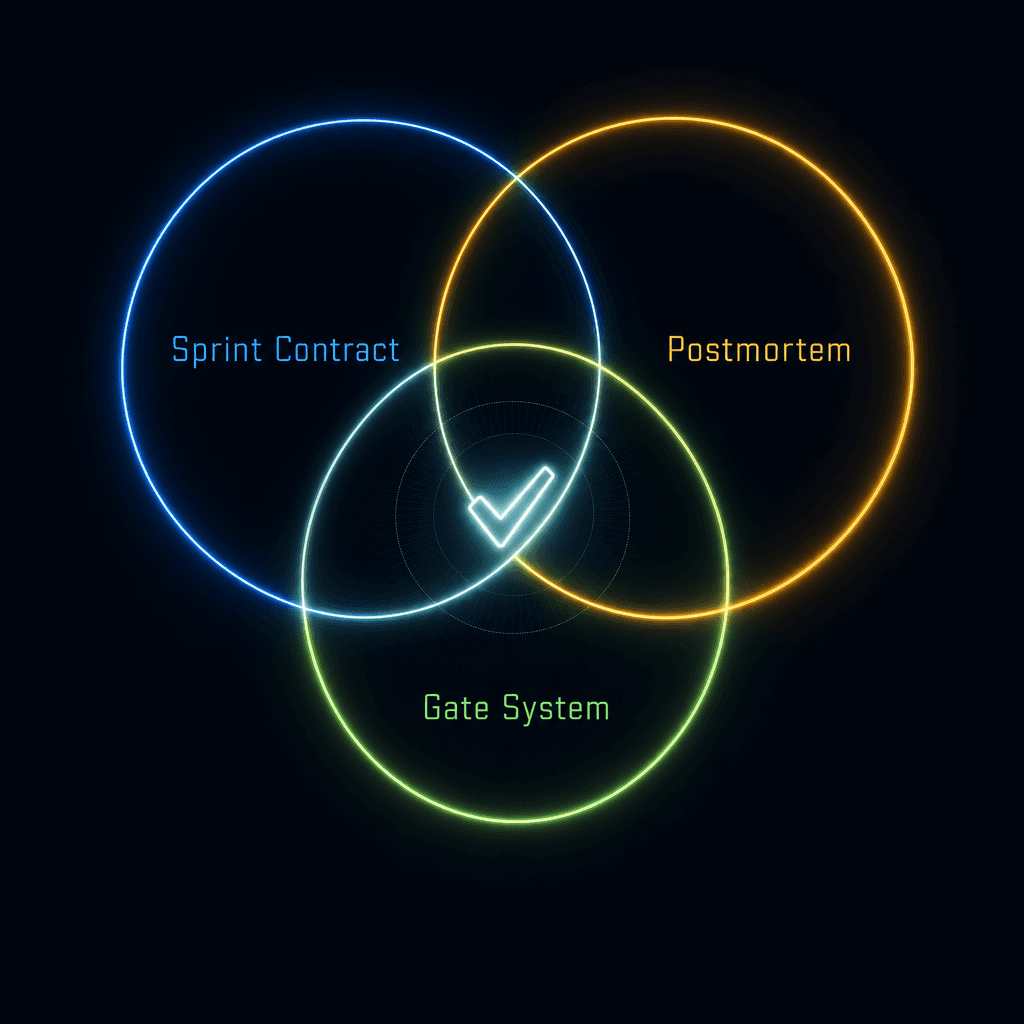
Accountability — three disciplines as one system
Sprint contracts, postmortems, and pre-flight gates only compound when they reference each other. The integration is the lesson.
Session slides
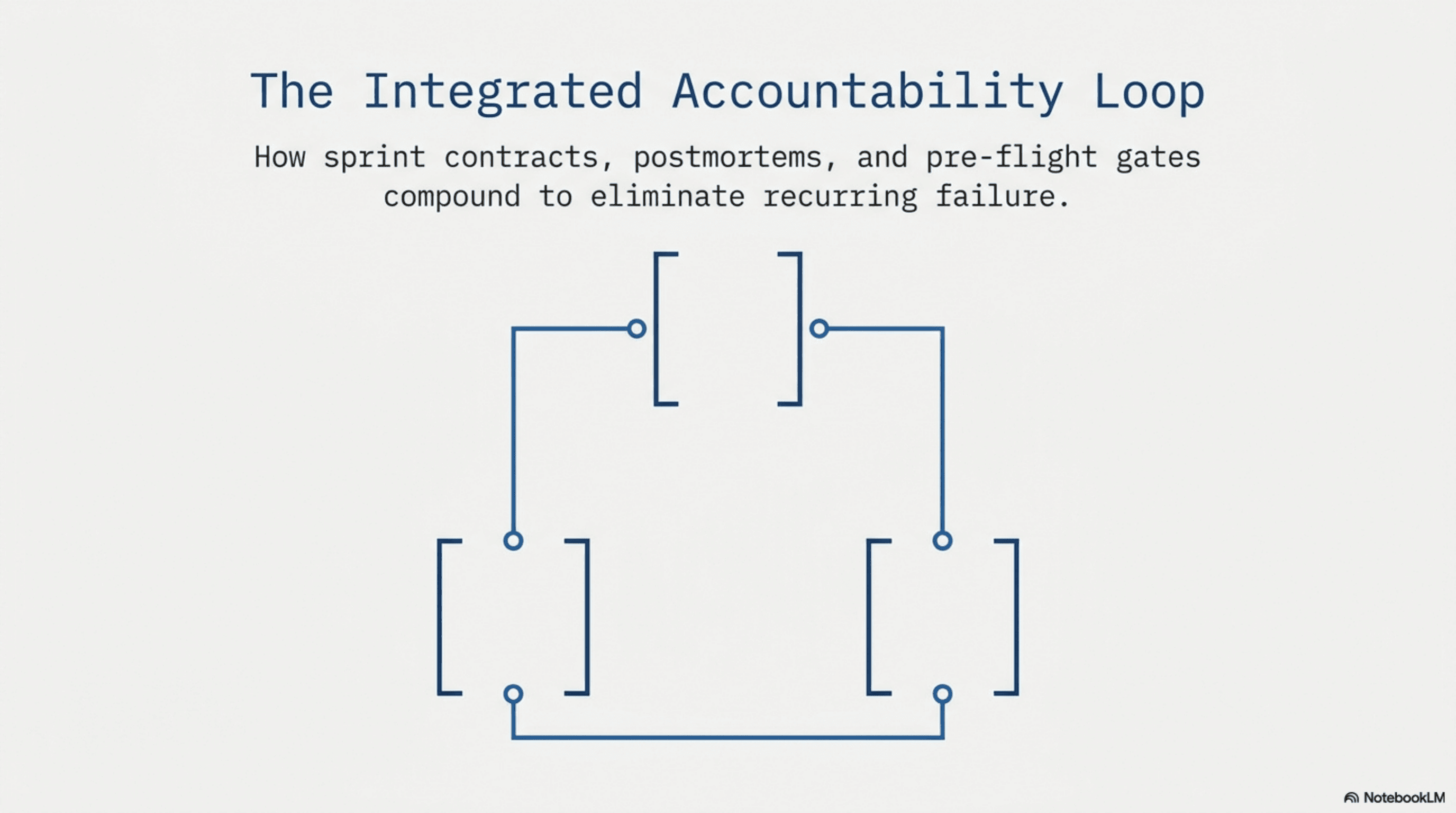
Three disciplines, one system
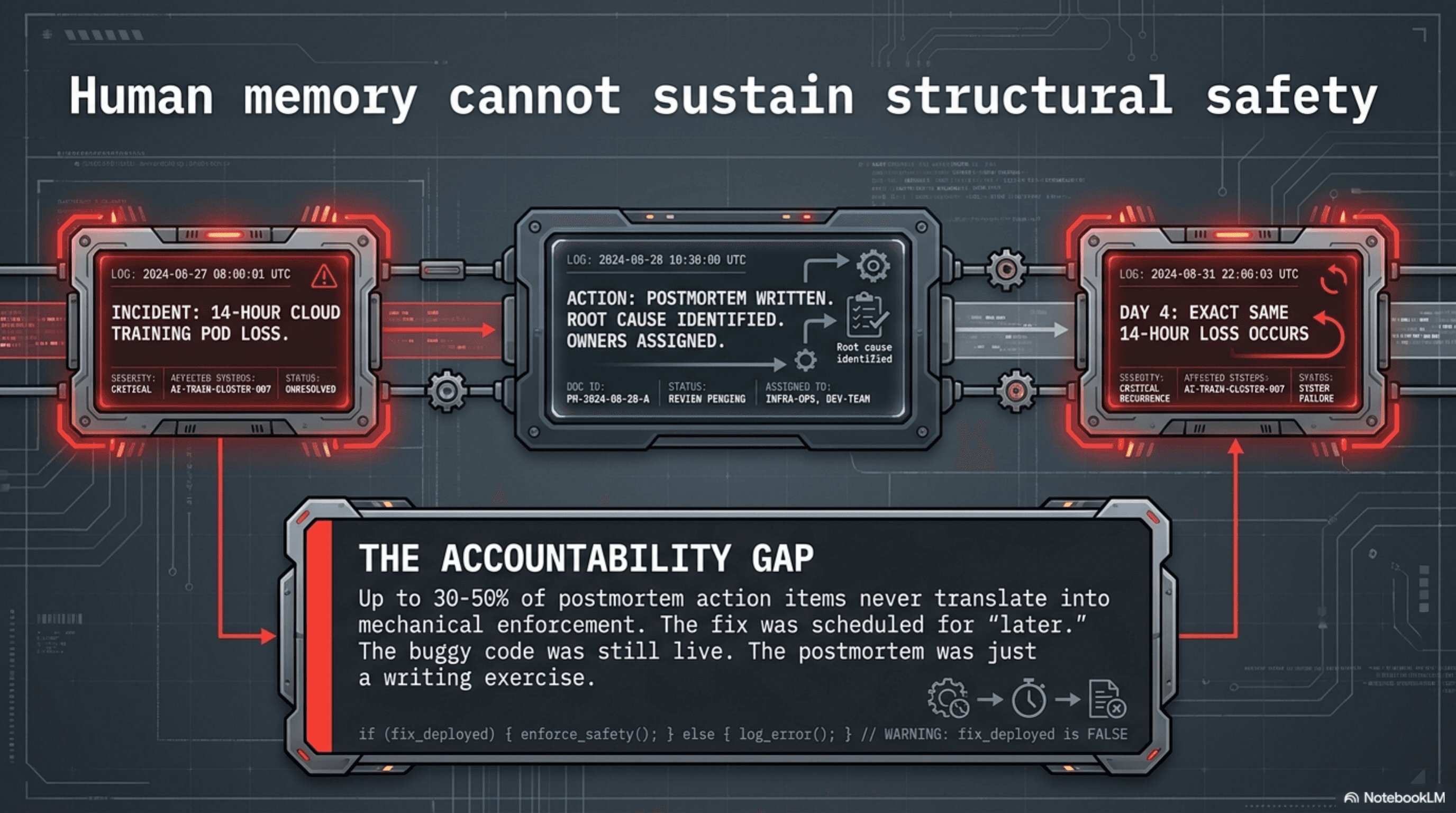
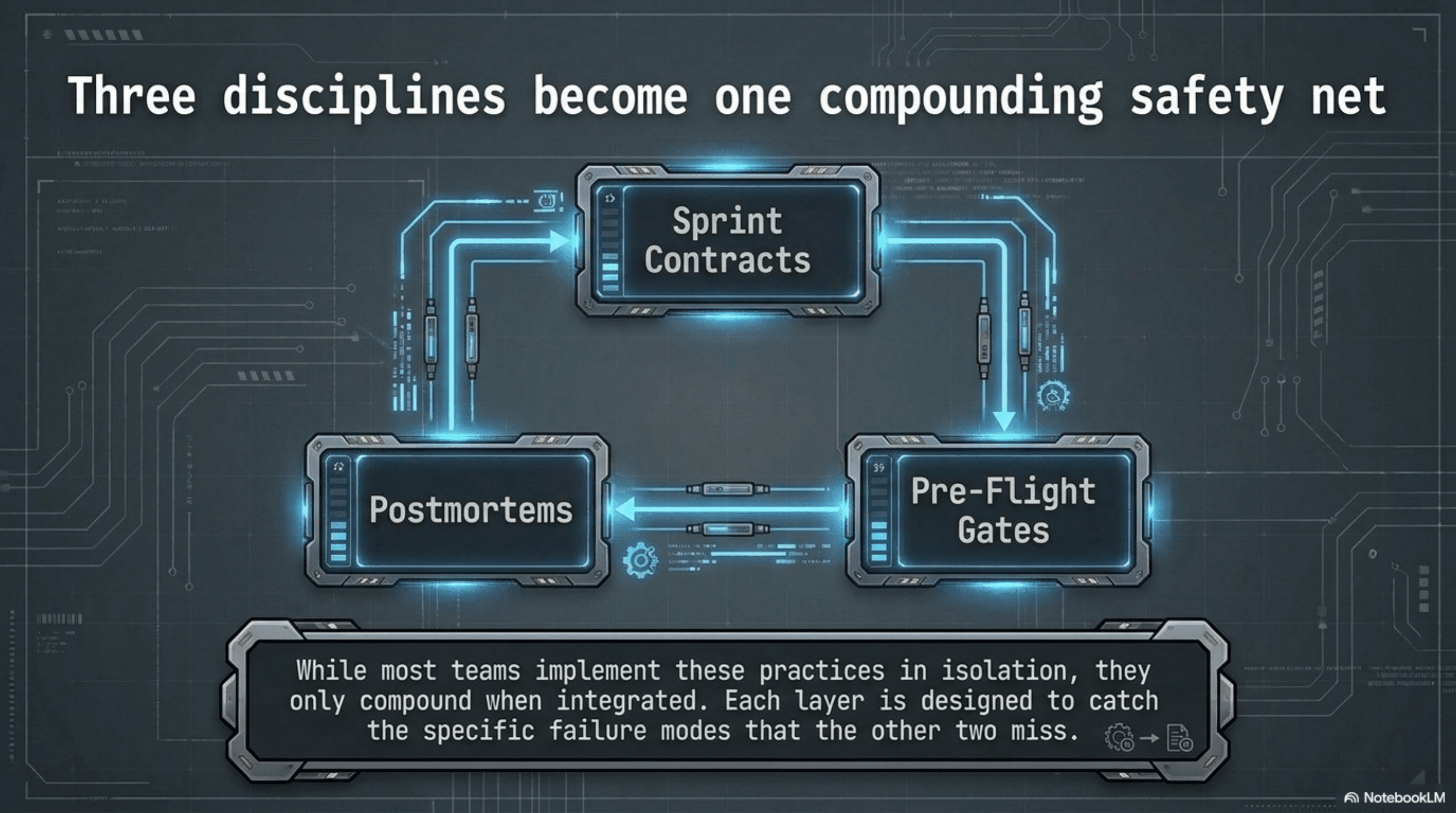
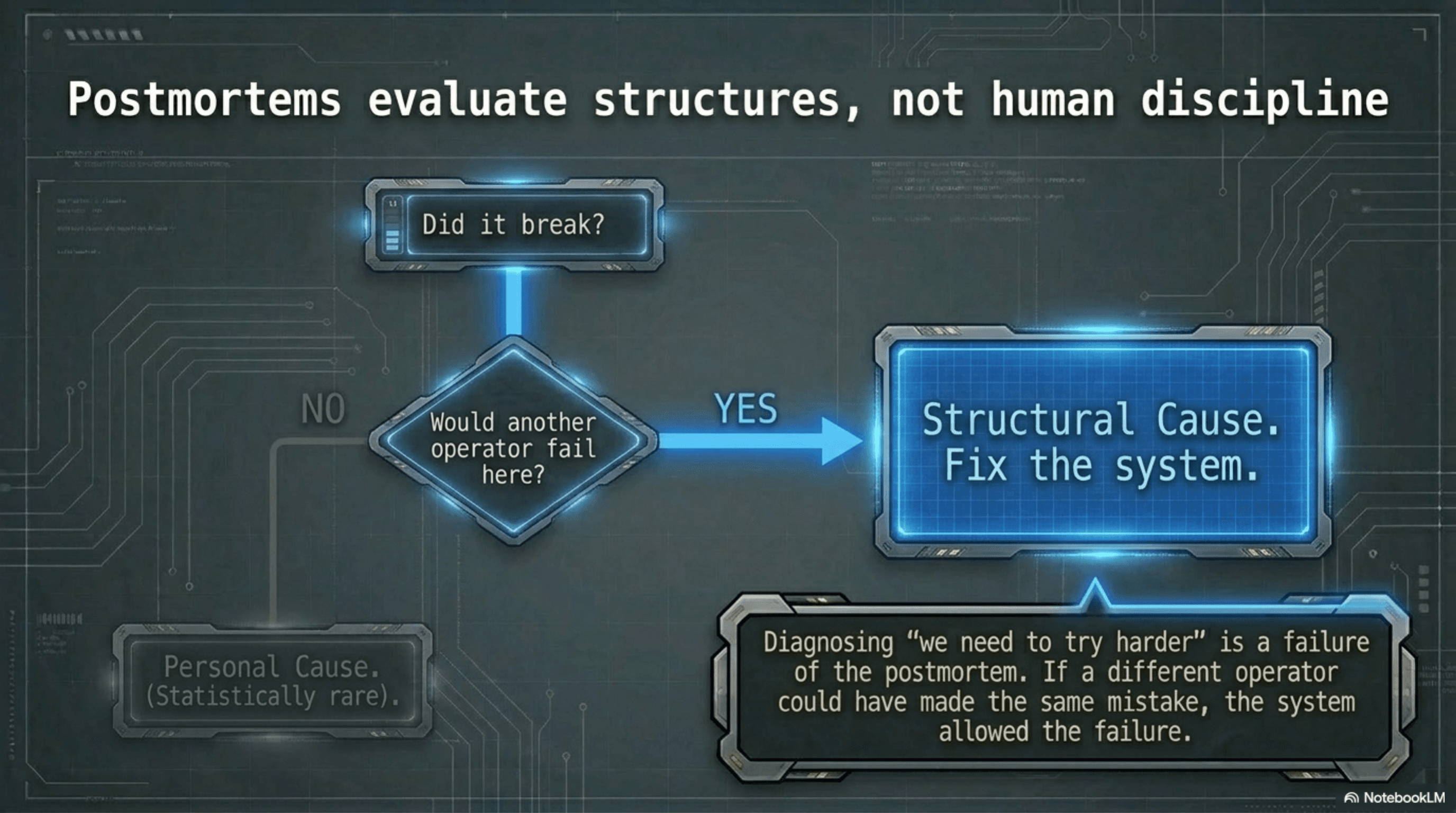
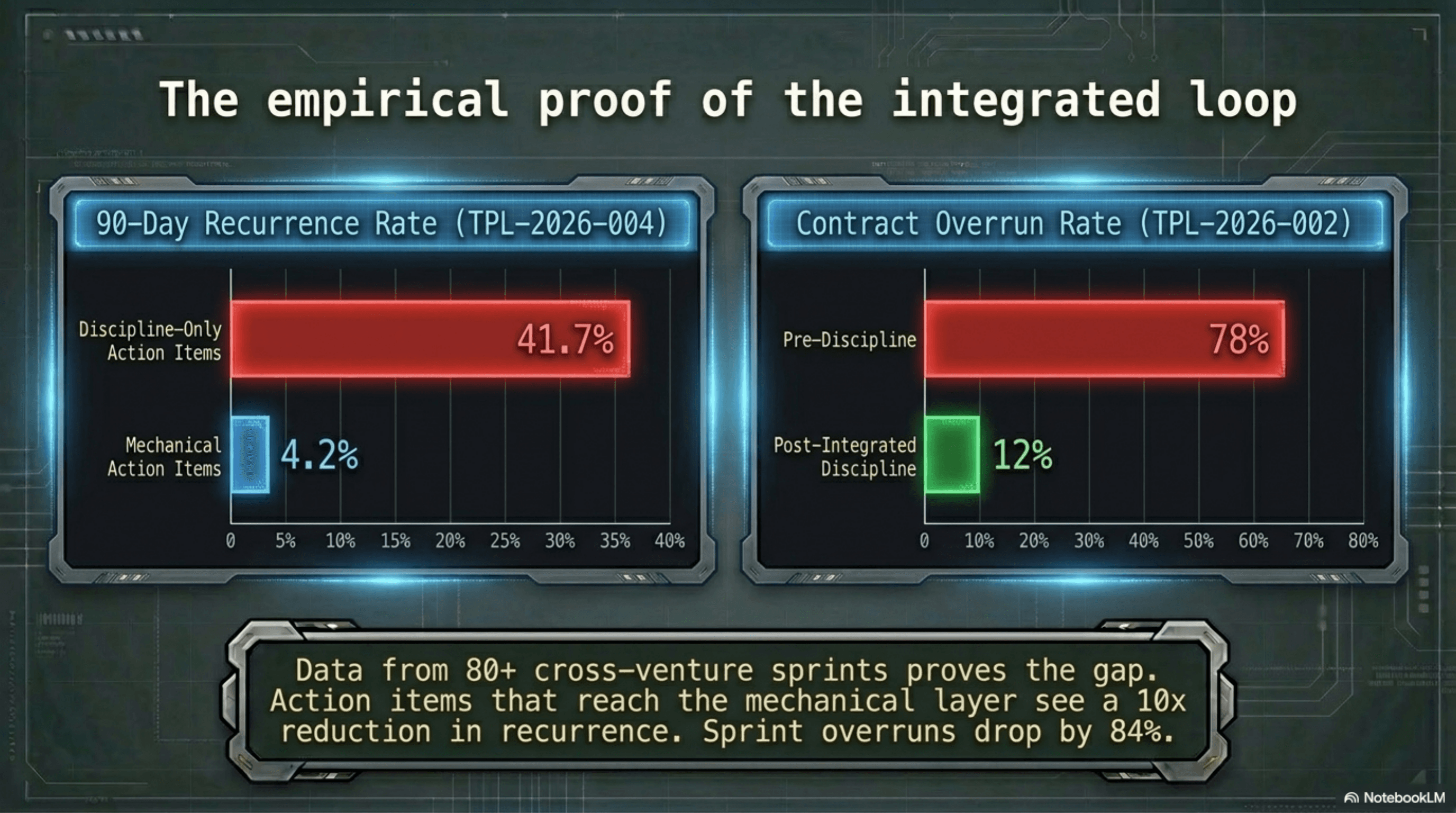
I think most people who adopt sprint contracts, postmortems, and gates run them in isolation. Each one does some useful work on its own. None of them catch the failure modes of the others, which is the part I missed for a long time.
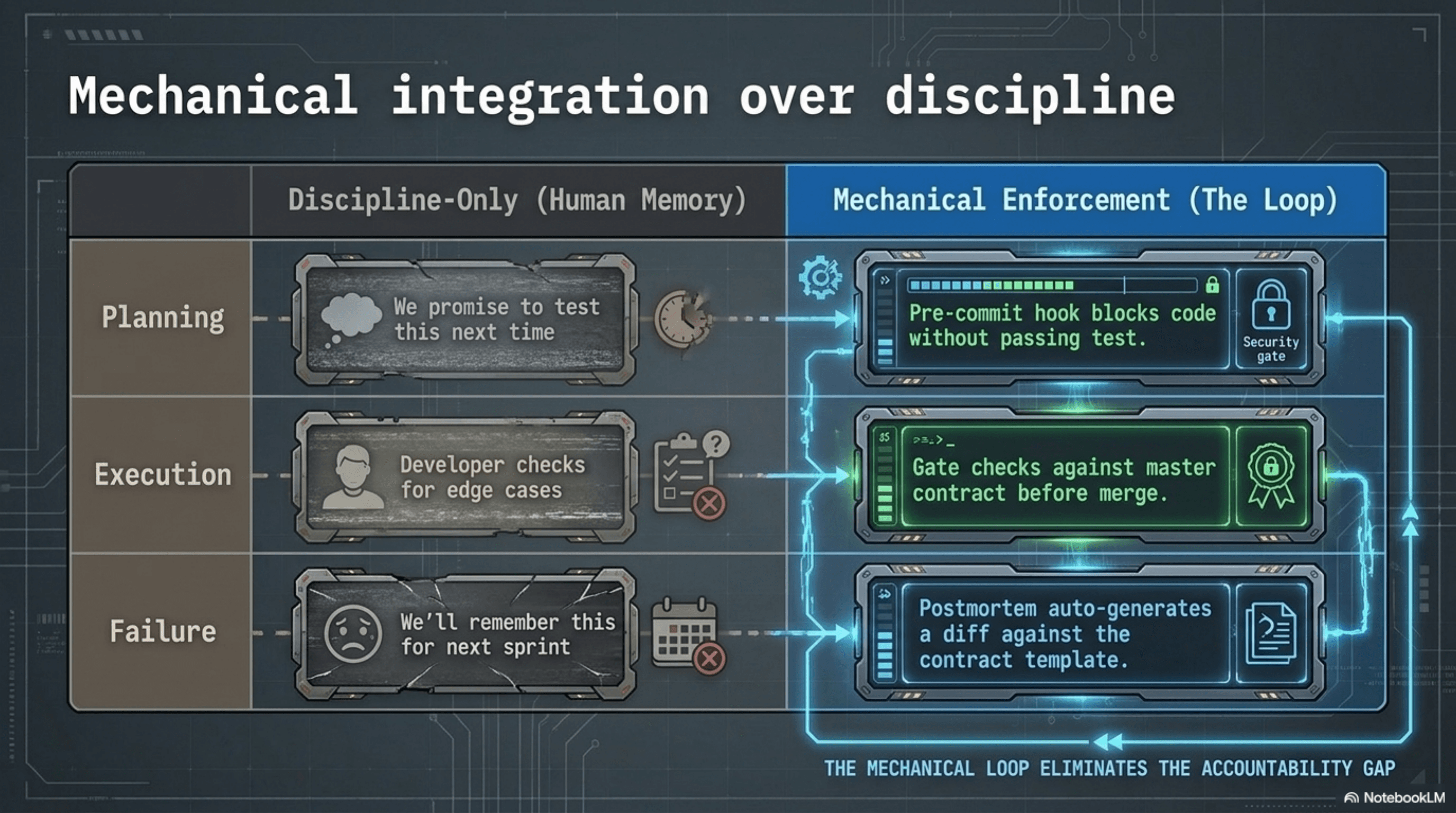
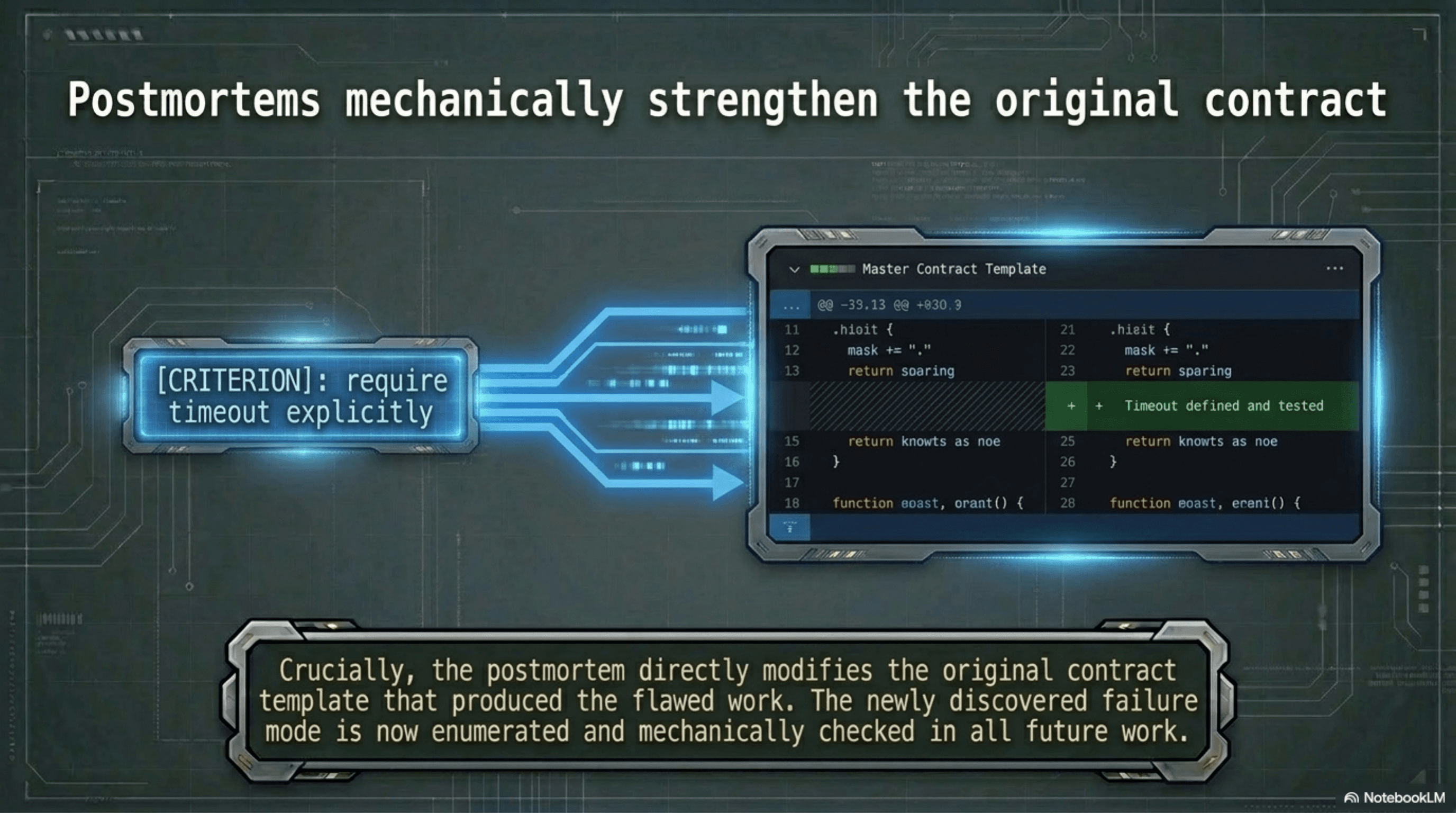
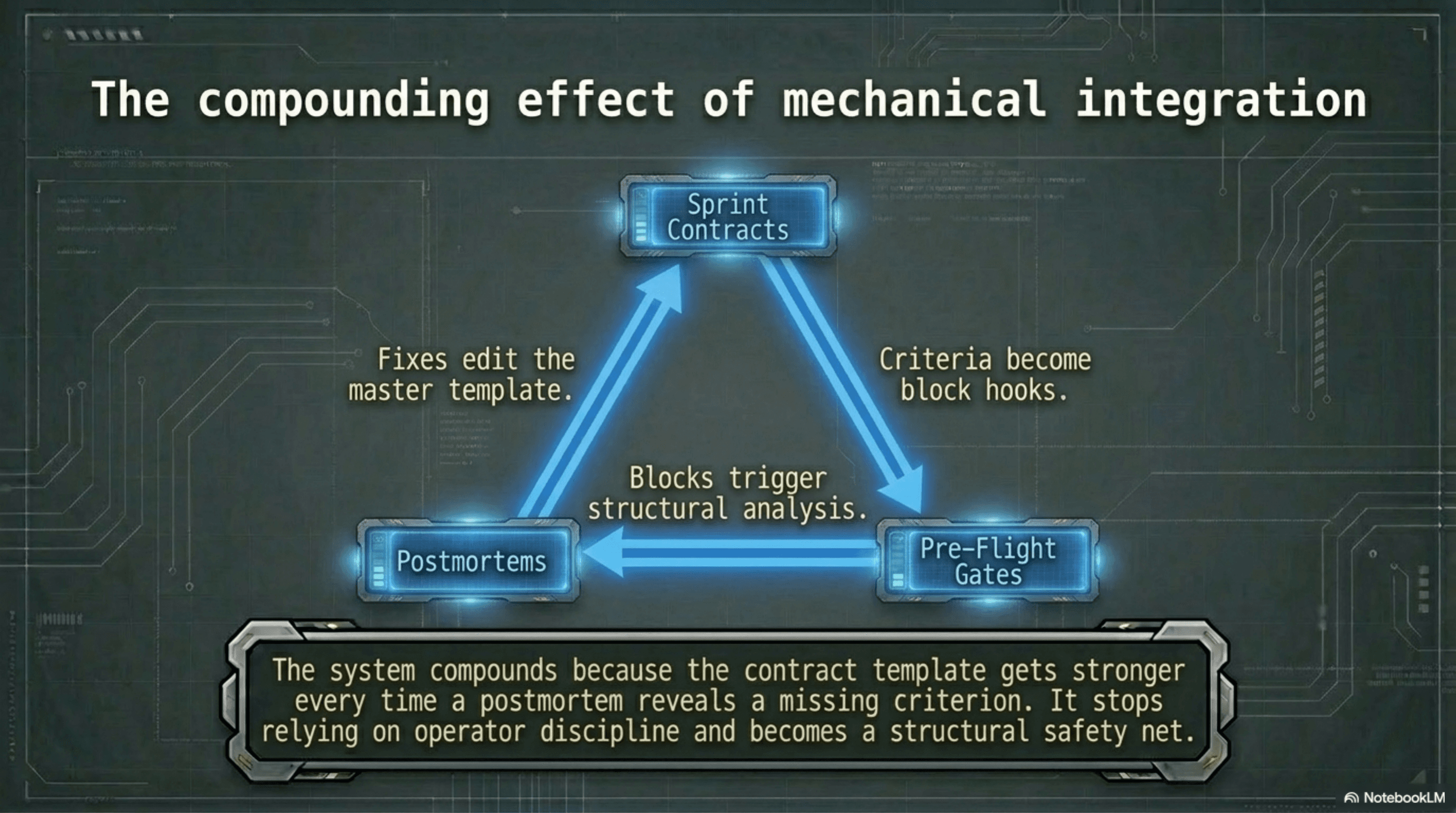
Compounding starts when they reference each other. Contracts produce gates. Postmortems strengthen contracts. Gates carry context from postmortems back to runtime. Each layer covers what the others miss, and the three practices stop being separate and start being one loop.
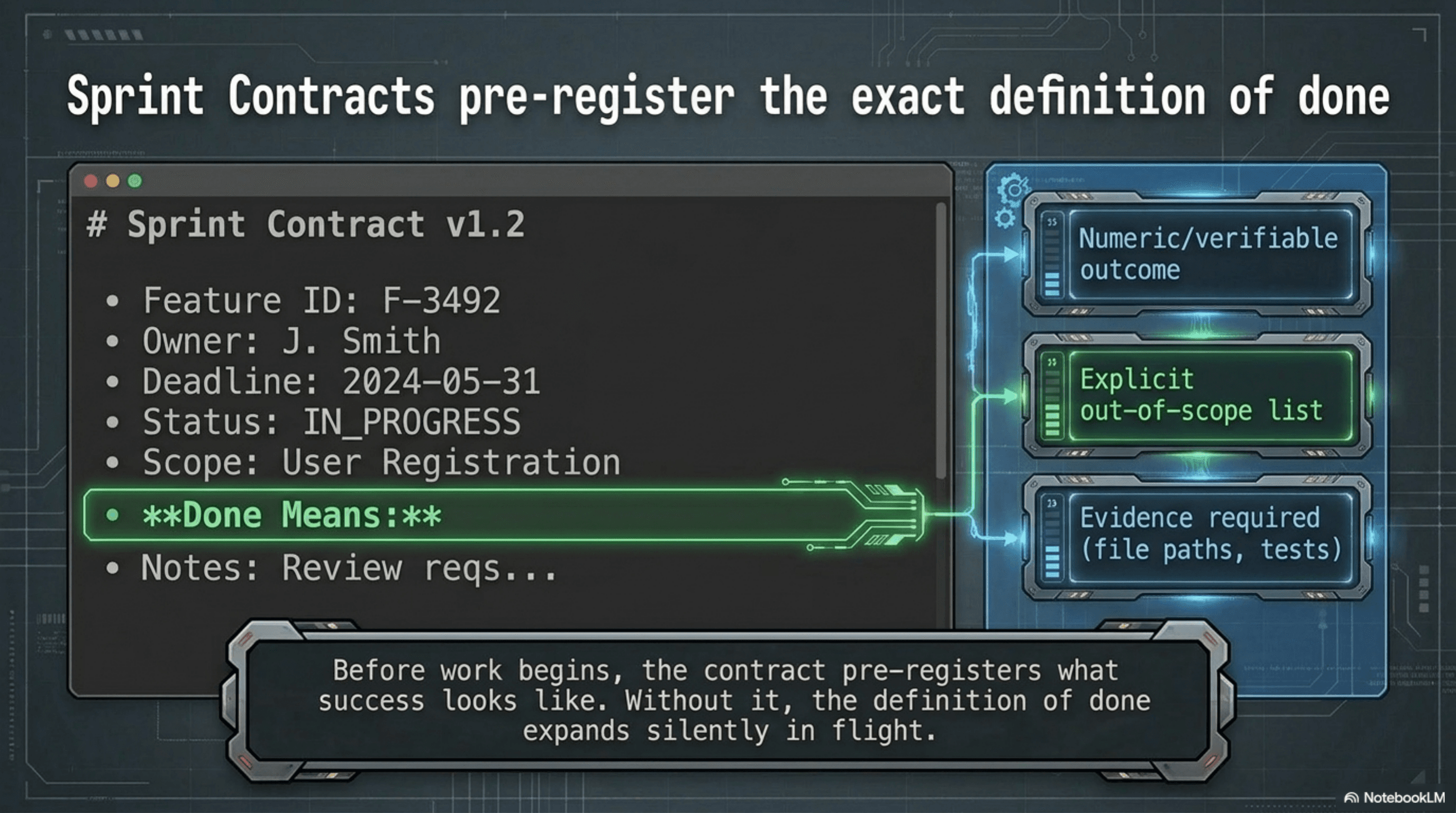
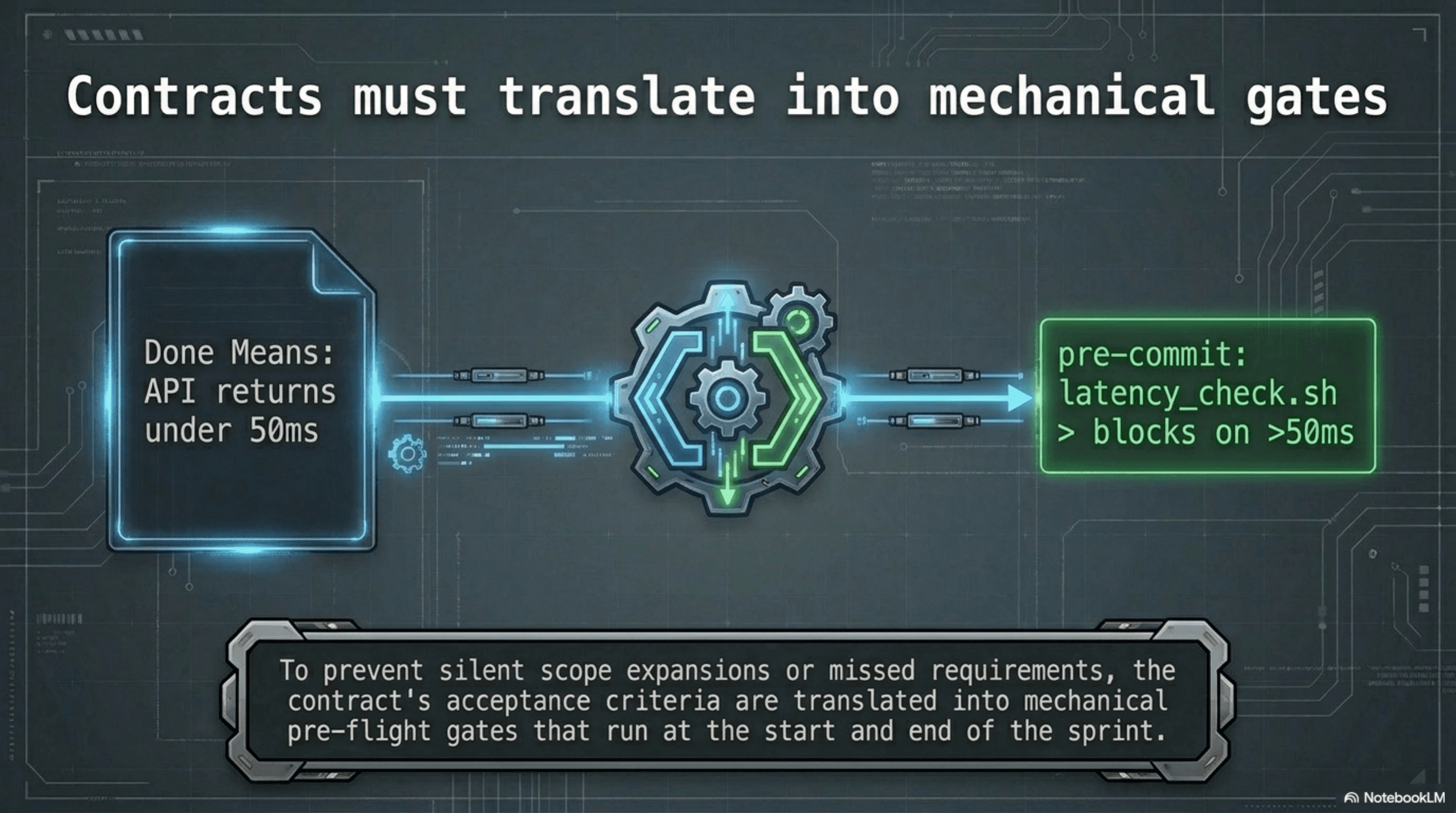
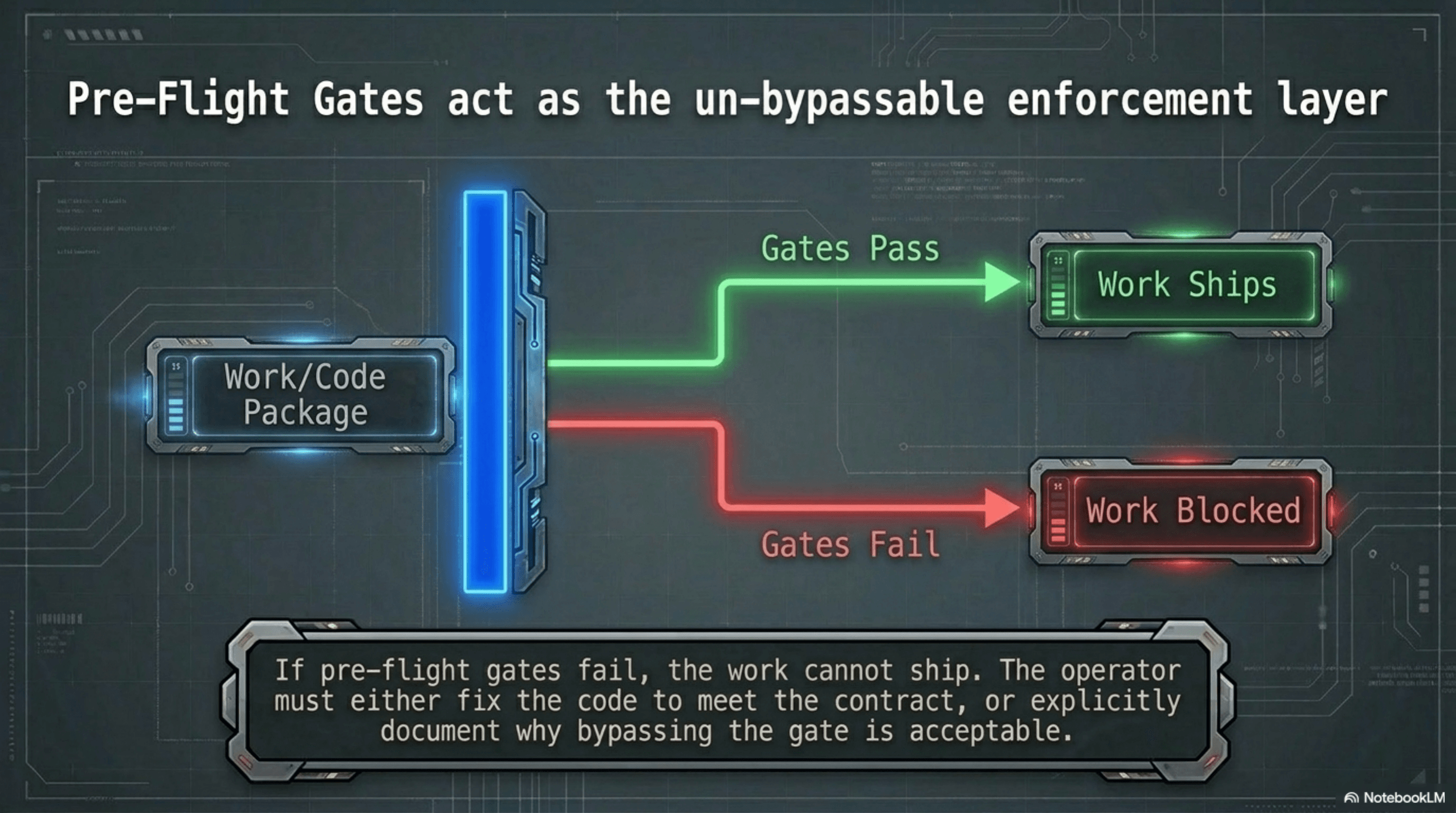
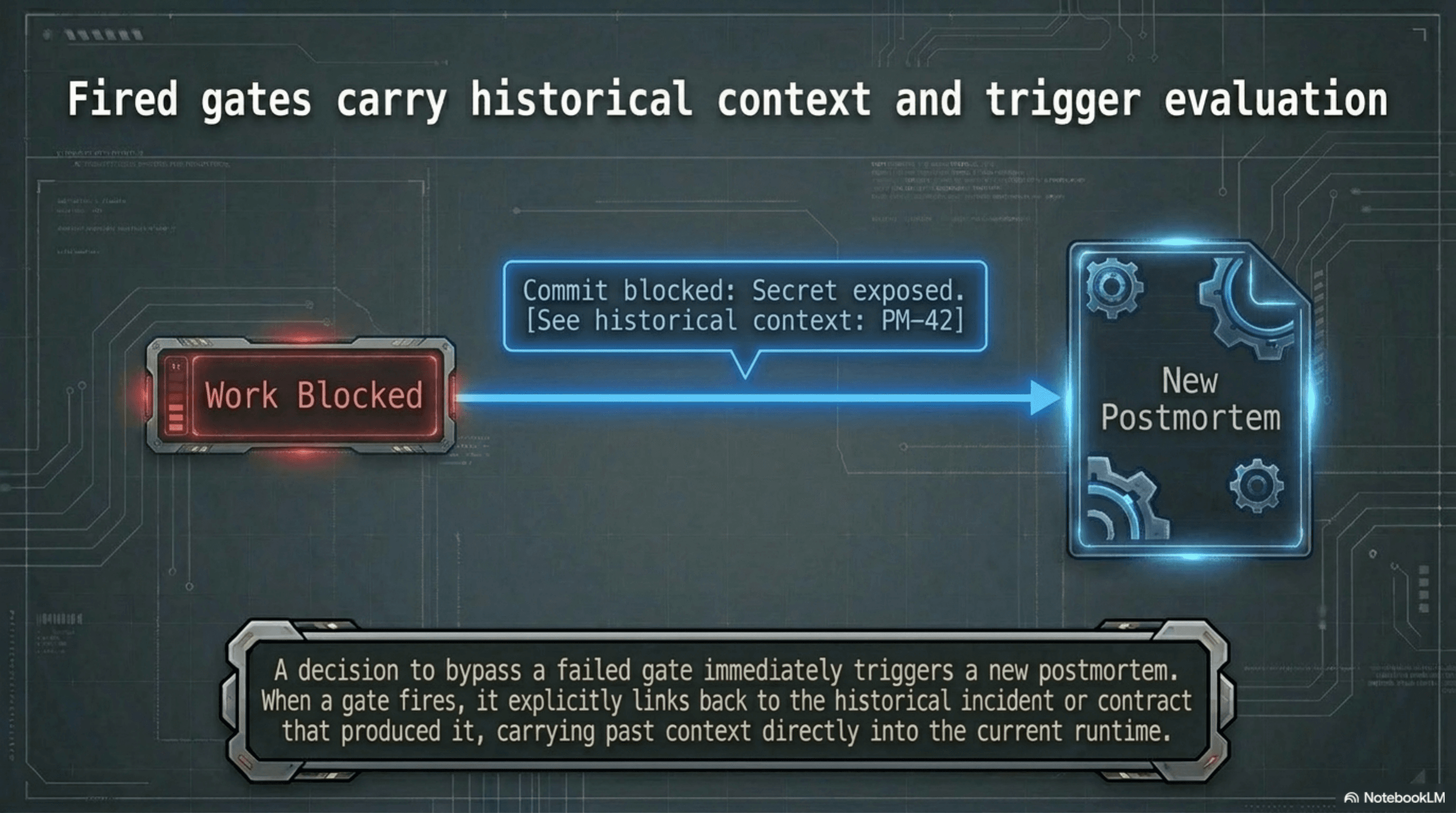
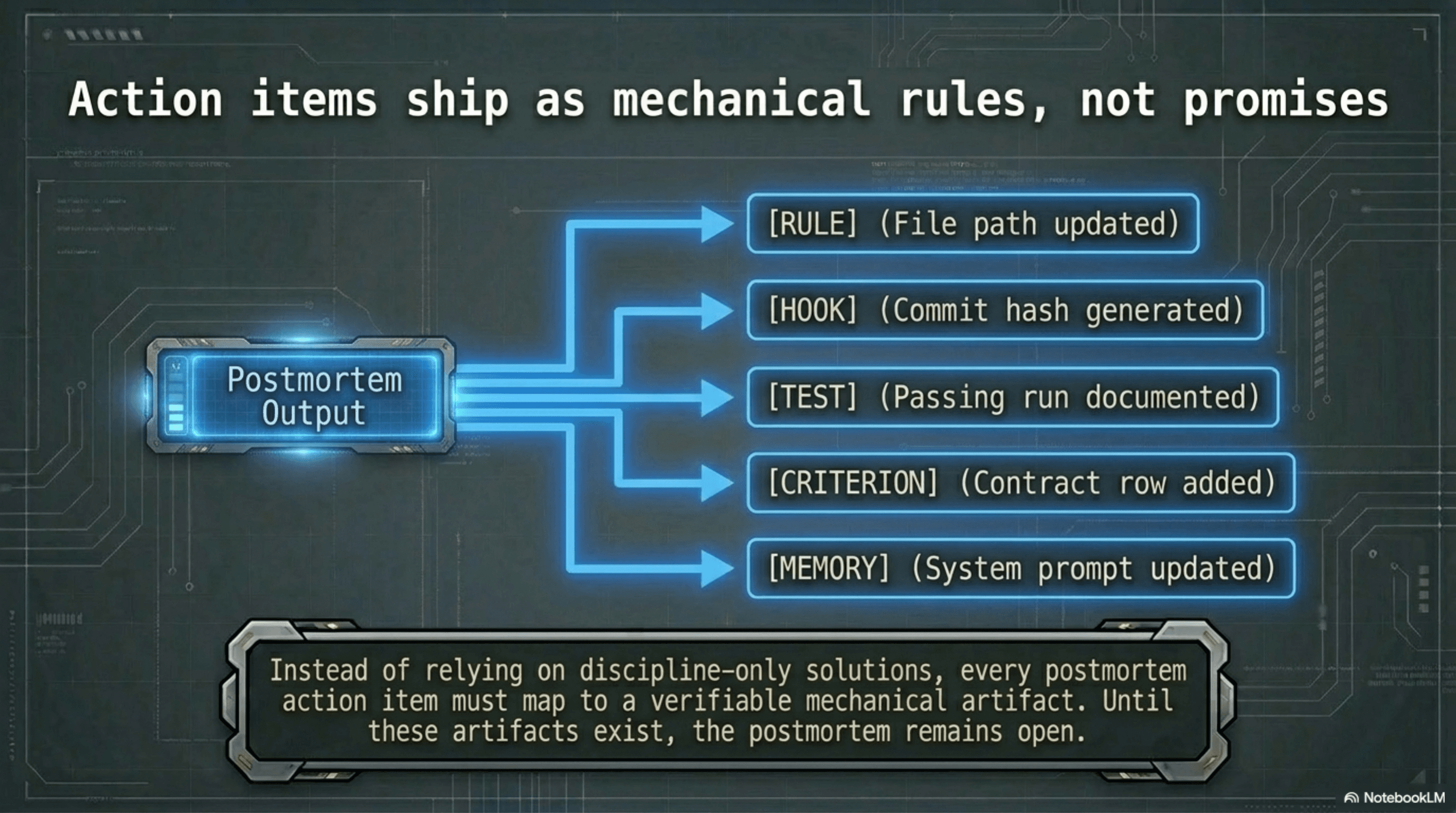
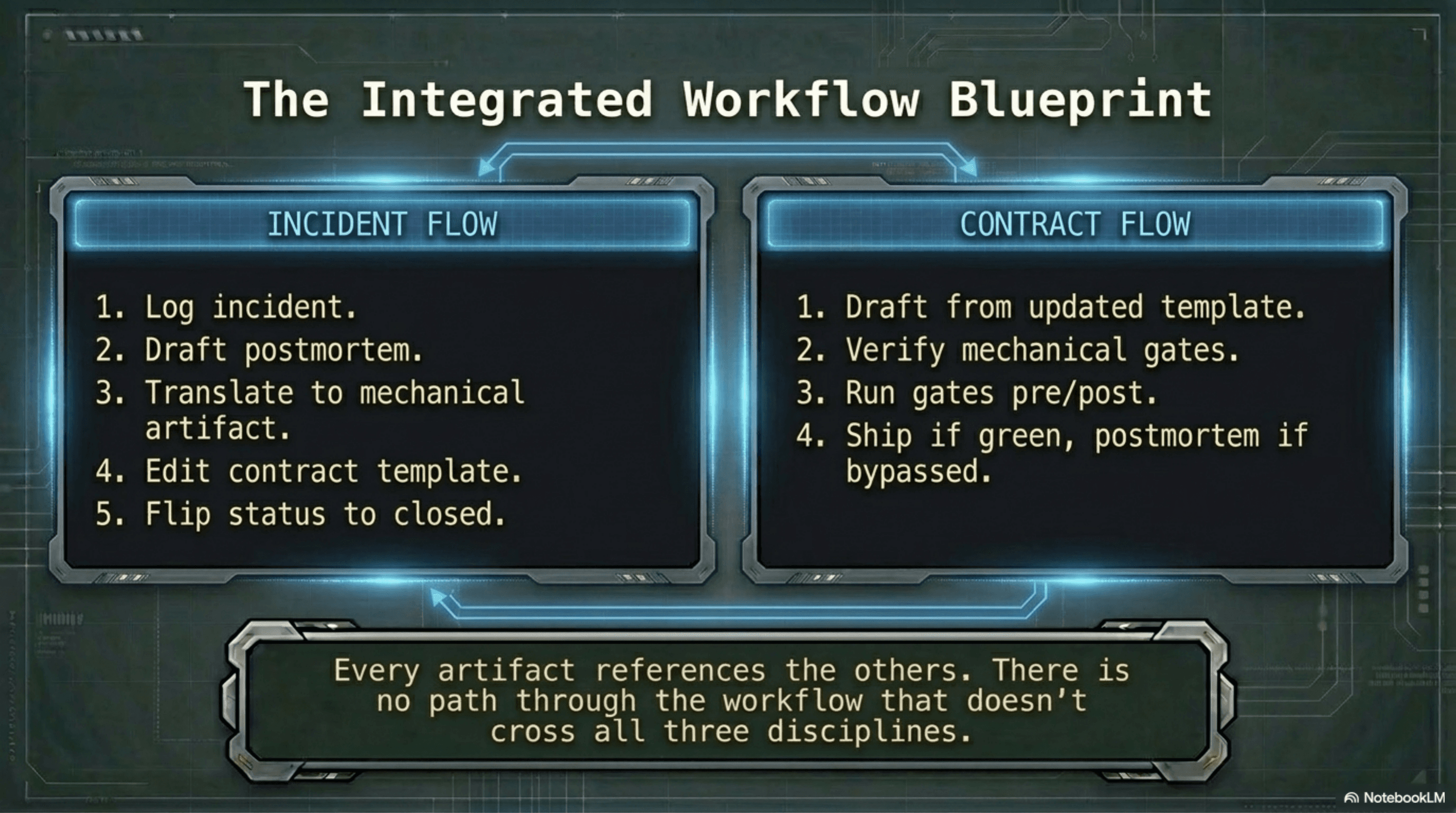
The integration is mostly mechanical. A contract criterion ships as a gate. A postmortem action item ships as a gate or a contract criterion. A gate that fires links back to the incident or the contract that produced it. None of this needs new tools. It needs every artifact in one layer to have a matching artifact in the others.
Where the three disciplines catch each other
Compounding works because each discipline catches what the other two can’t. The table below is the entire integration in one view.
| Discipline | Catches | Misses (caught by next discipline) |
|---|---|---|
| Sprint contracts | Scope drift, missing acceptance criteria, ambiguous “done” | Failure modes not enumerated in the template — caught by postmortems |
| Postmortems | Structural causes of failures, gaps in contract templates | Action items that don’t ship — caught by gates / mechanical layer |
| Pre-flight gates | Missing checks at runtime, bypassed disciplines | Gate criteria that aren’t in the contract — caught by next contract’s template review |
The cycle closes. Gates catch what postmortems missed. Postmortems strengthen contracts. Contracts produce gates. Without all three, one failure mode leaks through every time.
The rest of Expert · Lesson 04 is for subscribers.
Accountability — contracts + postmortems + gates as one system
- Every Expert-tier lesson — diagnostic prompts, transcripts, prompt kits, full homework
- Every research paper — methodology, figures, tables, reproducibility appendices
- New Expert lessons + papers as they ship (quarterly cadence)
- Foundations + Operating lessons stay free; bundles on GitHub stay free; this tier is the deep stuff
Free while the early catalog ships. Paid tier comes later — subscribe now and you’re grandfathered in.